A clear tree care and trimming schedule tells you when to act, why it matters, and how to keep trees on your property healthy, safe, and attractive. In El Cajon, our local climate, common species, and city rules shape a calendar that’s different from coastal or high-desert plans. This guide walks homeowners through practical, season-by-season steps: how scheduled pruning builds stronger structure, when to watch for pests and disease, which trees need special timing, and when to call a pro. After a short overview of the basics, you’ll find a seasonal checklist, species-specific tips, safety and cost factors, and instructions for getting local professional help. If you already have a job in mind, request a free estimate and we’ll tailor a maintenance plan and cost projection to your property. The sections below use local examples and simple checklists so you can set up an annual El Cajon tree care routine with confidence.
Why a Tree Care and Trimming Schedule Matters for El Cajon Homes
A planned schedule of pruning, inspections, and treatments keeps trees healthier, safer, and better looking over time. Routine work done at the right biological windows lowers disease risk and helps wounds close faster. Regular maintenance prevents hazardous branch failures, keeps canopies clear of roofs and power lines, and protects your property value by preserving curb appeal. The paragraphs below explain the health benefits and the real property outcomes so homeowners understand both the science and the practical reasons to act.
How Scheduled Tree Care Boosts Health and Longevity
Planned care focuses on structural pruning, early disease control, and seasonal nutrition so trees put energy into growth instead of constant wound repair. Removing co-dominant stems, deadwood, and congested branches reduces places where decay starts and strengthens a tree’s mechanics. Regular inspections spot pests or nutrient problems early, so corrections like fertilization or targeted treatment can stop decline before it becomes severe. Homeowners can watch a few basic indicators and keep a simple log of changes — that helps you know when to intervene and cuts down on the need for big corrective removals later.
Safety and Property Value Benefits of Regular Tree Maintenance
Proactive trimming lowers the chance of falling limbs, reduces storm damage, and cuts liability from obstructed sight lines or weakened trees near structures. Removing deadwood and fixing structural defects during calm weather means fewer emergency removals and less insurance hassle after storms. Healthy, well-shaped trees also improve curb appeal and can boost perceived property value by framing landscaping and improving sightlines year-round. Those safety gains tie directly into cost and hiring choices — homeowners must weigh DIY work against the complexity and risk of each job.
- Key homeowner safety and value benefits: Fewer limb failures and less property damage. Better visibility, access, and lower liability. Stronger curb appeal and lasting landscape value.
- These points show why a consistent schedule is both a safety step and a financial investment for El Cajon homeowners. Next, we turn those priorities into a practical seasonal calendar.
What’s the Best Seasonal Tree Care Schedule for El Cajon Homeowners?
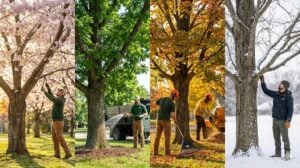
Match tasks to El Cajon’s warm Southern California climate so work is timed for when trees respond best and risks stay low. In short: winter is ideal for dormant structural pruning, spring for shaping and early pest checks, summer for monitoring and irrigation support, and fall for storm prep and root-zone care. Below is a quick seasonal overview, followed by detailed guidance to help you plan yearly maintenance windows.
Intro to the seasonal table: The table below summarizes recommended tasks and timing for each season so homeowners can follow a simple El Cajon tree care calendar.
| Season | Recommended Tasks | Frequency / Timing |
|---|---|---|
| Winter | Dormant structural pruning, remove deadwood, plan fertilization | December–February; best for most broadleaf pruning |
| Spring | Formative pruning, fertilize, inspect for pests/disease | February–May; shape trees and treat early pests |
| Summer | Watch for stress, adjust irrigation, light corrective trims | June–August; avoid heavy cuts in heat |
| Fall | Inspect for decay, remove hazardous limbs, prep root zone | September–November; pre-storm prep and debris cleanup |
Use this condensed plan to schedule chores and to discuss timing with professionals. The sections below expand on what to do each season and what homeowners can handle themselves.
Winter Care: Dormant Pruning and Preparation
Winter’s lower sap flow makes dormant pruning ideal for many El Cajon broadleaf trees — cuts are cleaner and disease spread is reduced. Focus on removing crossing or rubbing branches, correcting co-dominant stems, and taking out clearly dead wood. Avoid heavy pruning on late-blooming species and be cautious with oaks; aggressive oak pruning can stress the tree and damage bark, so save major oak work for pros who know local preservation practices. Use the dormant months to document tree condition and make a prioritized list for spring contractors or DIY tasks.
Spring & Summer Tasks
Spring is active growth time: do formative pruning to guide new structure, fertilize when soil warms, and inspect for pests and disease so you can stop problems early. In summer, focus on irrigation — deep, infrequent watering helps roots — and only perform light corrective trimming to remove weak, water-sprung limbs or suckers. Watch for stress signs like early leaf drop or browning edges and adjust watering and mulch. If pests or disease appear quickly, get a professional assessment to stop spread and protect long-term vigor.
Fall Prep: Getting Trees Ready for Dormancy
Fall work centers on inspection, removing deadwood, and thinning where needed to improve wind flow and reduce storm damage risk. Clear fallen debris and add mulch around root zones to hold moisture into winter and cut weed competition. Identify weak trees or those with root issues and schedule corrective pruning or a pro evaluation before winter storms. Good fall prep helps trees enter dormancy healthy and informs priorities for the next winter’s pruning.
Which Tree Types in El Cajon Need Special Care and Timing?
Trees differ in form, fruiting cycles, and pest risks, so palms, oaks, fruit trees, and evergreens each have specific care rhythms. The table below compares typical needs and timing so you can prioritize species-specific work on your property.
Intro to species table: Use this quick comparison to spot maintenance frequency and special notes for palms, oaks, fruit trees, and evergreens.
| Tree Type | Typical Care Needs | Recommended Pruning Frequency / Notes |
|---|---|---|
| Palm Trees | Remove dead fronds; monitor for pests | Annual or twice a year; avoid over-thinning |
| Oak Trees | Conservative pruning; protect bark | Prune sparingly; professional review advised |
| Fruit Trees | Prune for yield and light penetration | Late winter / early spring after dormancy |
| Evergreens | Formative shaping; occasional thinning | Light pruning once a year as needed |
Palm Tree Care in El Cajon
Palms don’t have woody branches like other trees — they depend on a healthy crown of fronds. Prune only dead or hazardous fronds; over-thinning weakens the palm and can invite pests. Avoid cutting green fronds. Timing depends on species and fruiting; document palm condition and hire pros for tall palms or when falling fronds threaten walkways. Regular checks for pests like borers or fungal issues let you treat problems early and prevent quick decline.
Maintaining Oaks, Fruit Trees, and Evergreens
Oaks need gentle pruning to avoid bark injury and stress — modest cuts in late dormancy are best, and major work should be done by experienced crews. Fruit trees respond well to late winter pruning to open the canopy and improve fruit production and air flow. Evergreens usually benefit from light yearly shaping to prevent congestion that holds moisture. Matching methods to species reduces long-term problems and the chance of costly corrective work later.
- Quick species rules for homeowners: Oaks: prune conservatively and call an expert for big cuts. Fruit trees: prune in late winter to improve structure and yield. Palms: remove only dead or hazardous fronds; don’t thin the crown.
These practical rules guide safe, species-appropriate maintenance and make it clear when to bring in pros for complex or risky jobs.
When Should El Cajon Homeowners Hire Professional Tree Care?
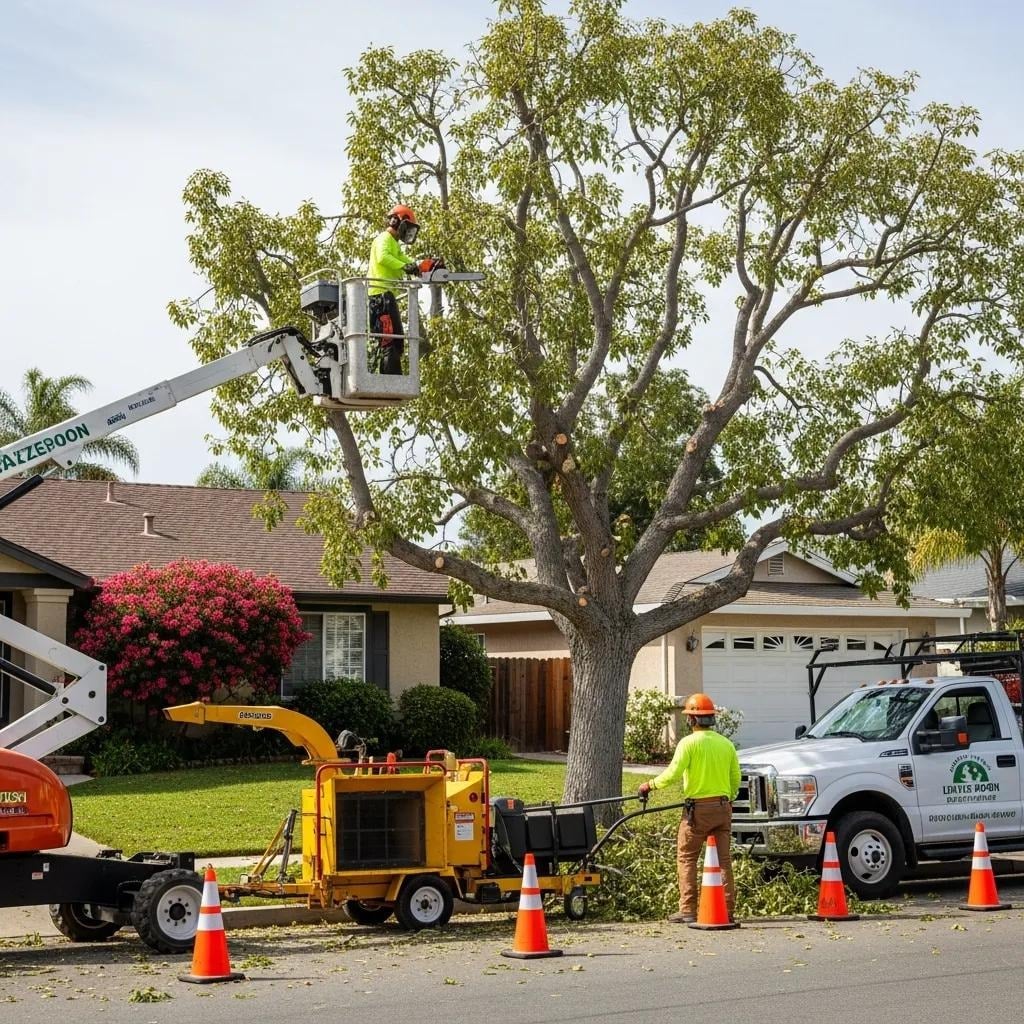
Hire a professional to reduce safety risk and ensure permits, equipment, and correct diagnosis for complicated issues. Licensed, insured crews bring the gear and expertise a homeowner can’t safely match for large trees. Call a pro when trees show advanced structural defects, when work is near utility lines, or when access and equipment needs exceed what you can manage. The checklist below helps you judge urgency and decide whether to schedule a professional assessment. After that, we cover disease signs and the special risks of working near utilities.
Warning Signs of Disease or Pest Infestation
Look for rapid crown dieback, widespread canopy thinning, discolored or prematurely dropped leaves, visible cankers or fungal fruiting bodies, and new root heave or soil movement near the trunk. If multiple branches decline over a few weeks, act quickly: document symptoms, limit pruning to deadwood, and contact an arborist for diagnosis and treatment. Early professional action preserves salvageable trees and lowers contagion risk to nearby trees.
Why Pros Are Needed Near Power Lines and Hazardous Branches
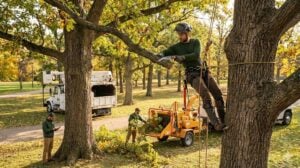
Work near power lines or large hazardous limbs carries real danger and regulatory issues that make professional crews essential. Licensed teams coordinate with utilities, use specialized rigging, and carry insurance to protect people and property. Pros follow safety protocols such as de-energized work plans, traffic control, and aerial rigging — steps homeowners can’t safely replicate with consumer tools. Hiring a pro cuts legal and safety exposure, ensures proper debris removal, and reduces the chance of secondary damage. If a tree sits near utilities or has major structural defects, contact a licensed provider to assess risk and schedule mitigation — you can request a free estimate to review options and timing.
How Pedro’s Tree Service Supports Your El Cajon Tree Care Schedule
Pedro’s Tree Service is a local El Cajon team that is ready to set up seasonal maintenance plans, perform health checks, and respond to emergencies with licensed, insured crews. We create annual programs that include pruning, pest control, and fertilization tailored to your property and tree mix. Pedro’s Tree Service offers free estimates so you can begin with a no-obligation evaluation and receive a plan matched to your seasonal needs. For scheduling, call 619-257-2458 or visit our contact page to request your free on-site assessment.
Tree Maintenance and Trimming Services from Pedro’s Tree Service
Pedro’s Tree Service provides core services that fit an annual care plan: pruning, fertilization, and pest control; species-appropriate trimming including palms; tree removal and stump grinding when needed; emergency storm response; and fire-prevention work to lower fuel loads. Licensed, insured crews deliver these services with local know-how and a family-owned approach. We can set up recurring maintenance plans that help homeowners keep trees healthy and properties safe throughout the year.
- Services highlighted: Tree Maintenance: pruning, fertilization, pest control. Tree Trimming & Palm Care: species-appropriate techniques. Tree Removal, Stump Grinding, Emergency Services, Fire Prevention.
These services support the seasonal calendar and reduce homeowner risk by combining routine care with emergency response options.
How to Get a Free Estimate and Schedule Tree Care with Pedro’s Tree Service
Requesting a free estimate is easy: call 619-257-2458 or use the contact page to describe the job and check availability. You can also upload photos and provide your El Cajon address to help speed up the initial review. During the on-site visit, the crew documents tree conditions, recommends a maintenance timeline, and provides a written plan and estimate. Before the visit, gather a few basics—tree locations, species if known, recent storm or pest issues, and any access limitations. This turns a general concern into a clear, scheduled plan aligned with seasonal needs and safety priorities.
Typical Costs and Considerations for Tree Trimming in El Cajon
Costs depend on measurable factors — tree size, species, access, equipment needs, and scope of work — so transparent breakdowns help homeowners budget and compare bids. The table below outlines common cost drivers, how they affect price, and typical examples to guide expectations when requesting quotes. After the table, you’ll find tips for interpreting estimates and balancing cost against safety and long-term tree health.
Intro to cost table: Use this breakdown to see why estimates vary and to prepare focused questions for providers.
| Cost Factor | How It Affects Price | Typical Range / Example |
|---|---|---|
| Tree size & height | Larger trees require more crew time and specialized gear | Cost rises sharply with height and canopy size |
| Access & equipment | Tight access or crane work adds labor and rental fees | Complex jobs can double the price |
| Scope of work | Pruning, removal, and stump grinding vary by complexity | Removal plus stump grinding costs more than pruning alone |
| Species & condition | Hazardous or diseased trees need extra precautions | Insurance, disposal, and safety measures raise cost |
What Drives Tree Trimming Prices in El Cajon?
Factors include tree height and canopy size, access limits that affect equipment and crew time, hazards like utility lines, required permits or traffic control, and add-on services like stump grinding or debris hauling. Seasonal timing also affects availability and pricing; scheduling routine work in off-peak months can lower costs. When you compare quotes, ask for itemized estimates that separate labor, equipment, disposal, and permits so you can make an informed choice. Clear line items reduce surprises and keep the bid aligned with your seasonal plan.
Professional Service vs. DIY Tree Care
Professionals bring insured crews, specialized equipment, and technical assessment that reduce liability and respect tree physiology — crucial for large trees, work near utilities, or structural pruning. DIY can save money on small, low-risk tasks like minor thinning or deadwood removal, but it raises the chance of improper cuts, accelerated decline, and personal injury when the job is beyond homeowner skill. Hire pros for heights beyond safe ladder work, species that need careful cuts (like oaks), or any work near power lines. The right choice balances safety, tree health, and regulatory compliance against short-term savings.
- DIY vs Professional summary: Professional: safer, insured, and technically accurate for complex or hazardous jobs. DIY: OK for small, low-risk tasks but carries higher long-term risk. Decision criteria: height, proximity to utilities, tree condition, and homeowner experience.
Use this comparison to decide when to invest in professional help to preserve trees, protect property, and follow the seasonal care schedule above.
Frequently Asked Questions
What are the signs that my tree needs immediate attention?
Watch for rapid crown dieback, noticeable canopy thinning, discolored or prematurely dropped leaves, visible cankers or fungal growth, and soil movement or root heave at the trunk. If several branches decline quickly, act fast: document symptoms, take photos, and contact a professional arborist for diagnosis and next steps.
How can I ensure the safety of my trees during storms?
Regular inspections and maintenance help trees stand up to storms. Remove deadwood, prune weak branches, and maintain a good canopy structure. Keep the root zone healthy with mulch and proper watering. If a tree looks structurally weak or sits near power lines, hire a professional to assess and make corrective repairs before a storm hits.
What is the best time to plant new trees in El Cajon?
Fall or early spring are the best planting windows in El Cajon. Fall gives new roots time to establish before summer heat, and early spring takes advantage of active growth. Choose species suited to local soil and microclimates, and prepare the site with soil amendments if needed.
How can I improve the soil quality for my trees?
Start with a soil test to check pH and nutrients. Add organic matter like compost to improve fertility and drainage as recommended. Mulch around the base to retain moisture and suppress weeds, and water consistently during dry spells to support root development.
What are the benefits of hiring a professional tree service?
Hiring pros gives you access to the right tools, expert knowledge, and safety protocols that lower risk. Professionals can identify hazards, diagnose health issues, and handle complex tasks like large removals or work near utilities. Proper, professional care protects long-term tree health and helps you comply with local rules.
How often should I inspect my trees for health issues?
Do a visual check at least twice a year — spring and fall are good times — and after big storms. Look for disease, pests, and structural issues. Regular monitoring lets you catch problems early and avoid expensive emergency work later.
What should I do if I suspect my tree is diseased?
Document symptoms (photos help) and avoid pruning or moving infected wood until you have a diagnosis. Call a certified arborist to identify the problem and recommend treatment, which might include targeted pruning, pest control, or removal in severe cases to protect nearby plants.
Conclusion
Putting a tree care and trimming schedule in place protects the health, safety, and beauty of your El Cajon property. Follow a seasonal plan tuned to local conditions and bring in professionals when jobs are complex or risky. Working with a local team like Pedro’s Tree Service makes it easy to get expert care and timely interventions tailored to your needs. Start with a free estimate to get a personalized plan for a healthier landscape.