An arborist brings trained knowledge of tree biology, safe work practices, and practical risk management to help homeowners and property managers keep trees healthy and valuable. This guide explains what certified arborists do, how their skills protect and extend a tree’s life, and why choosing a trained tree care specialist matters in El Cajon’s local climate and urban setting. Property owners often struggle to diagnose decline, decide between treatment and removal, and plan long-term care—an experienced arborist provides accurate diagnosis, targeted treatment, and safe, efficient service. You’ll learn how certification and local knowledge reduce risk, how professional pruning and pest control improve longevity, and how arborists handle emergencies while protecting property value. The guide also compares DIY risks with professional cost-effectiveness and offers practical steps to prepare for an estimate. Throughout, we reference local context and trusted service features—like free estimates, licensed and insured crews, and a satisfaction-first approach—to help you make confident tree-care decisions in El Cajon.
Why Choose a Certified Arborist for Your Tree Care Needs?
Certified arborists combine formal training in tree science with hands-on experience and recognized credentials. That mix helps them spot problems early, use correct pruning methods, identify diseases, and follow safety and regulatory standards—avoiding fixes that can harm trees or property. When you hire a certified arborist, treatments follow industry best practices (for example, pruning to ANSI A300 standards), which favors long-term tree health over quick fixes. Below are the main reasons homeowners benefit from certified arborist services.
Research on professional credentialing highlights why certification and adherence to standards matter in tree care.
Arborist Certification & Professional Standards
Professional credentialing is the process that verifies an individual’s knowledge, skills, and ethical practice against industry standards. The International Society of Arboriculture (ISA) administers widely recognized arborist certifications and related credentials that signal technical competence and ongoing education.
Motivations and barriers of professional certification for tree workers, JS Gordon, 2024
Certified arborists deliver three clear advantages:
- Tree biology expertise: Training leads to accurate diagnosis and targeted care that support a tree’s health and structure.
- Safety & compliance: Trained crews follow safety protocols and handle permits correctly, lowering liability and property risk.
- Long-term value: Professional care focuses on extending tree life and planning maintenance that cuts replacement and emergency costs over time.
Certification is a practical screening tool when choosing who will work on mature or high-value trees. Knowing an arborist’s qualifications sets expectations for the assessment and helps you ask the right questions.
What Qualifications and Training Do Certified Arborists Have?
Certified arborists usually complete formal coursework, supervised field time, and credential exams from recognized organizations. That training builds skills in tree biology, pest and disease identification, pruning science, and safe rigging and removal methods. Common topics include species-specific growth habits, root and soil care, insect and pathogen recognition, and safe equipment use—knowledge that reduces the risk of improper pruning or incorrect chemical applications. For homeowners, this means clearer diagnoses, appropriate treatments, and documented practices that protect landscapes and meet municipal rules. Asking about an arborist’s training helps you confirm they can handle complex issues like structural pruning, disease mitigation, or storm-damage stabilization.
Understanding these qualifications also helps you anticipate scope, timing, and cost during a free estimate.
How Does Local Expertise Enhance Tree Care in El Cajon?
Local expertise means arborists tailor care to El Cajon’s warm Southern California climate, common tree species, and local pest pressures. They adjust pruning schedules and irrigation guidance to regional weather patterns and drought conditions, and they know which species—palms, oaks, and popular ornamentals—need special attention. Familiarity with microclimates, soil types, and municipal rules also speeds permitting and prevents surprises. That regional knowledge leads to better timing for treatments, more effective pest control, and fewer follow-up fixes.
Property managers often rely on local assessments to build multi-year plans that optimize watering, pruning cycles, and pest monitoring for lasting tree health.
| Qualification / Training | Core Skill / Benefit | Practical Outcome for Homeowner |
|---|---|---|
| Arboriculture coursework | Understanding tree biology and growth | Accurate diagnosis and tailored treatment plans |
| Safety and rigging certification | Correct equipment use and crew procedures | Lower accident risk and protected property |
| Pest & disease training | Identification and integrated management | Targeted treatments that save healthy tissue |
This table links specific credentials to homeowner benefits, making it easier to see why those qualifications matter in practice.
How Does Professional Arborist Expertise Improve Tree Health and Longevity?
Pro arborists combine accurate diagnosis, species-appropriate treatment, and maintenance techniques that support structural integrity and long-term resilience. Using inspection tools and field experience, they separate pest, disease, environmental stress, and mechanical damage—preventing unnecessary removals and focusing work where it matters. Proper pruning and root protection preserve vigor; integrated pest management and soil care restore balance and curb repeat problems. The sections below outline common conditions and the usual arborist responses that improve outcomes over time.
Accurate diagnosis prevents needless treatments and preserves useful tree tissue. The table below shows common issues and typical professional responses.
| Condition | Typical Signs | Arborist Treatment / Outcome |
|---|---|---|
| Root rot / decline | Crown thinning, dieback, poor vigor | Soil aeration, drainage fixes, targeted fungicide, and monitoring to stabilize roots |
| Borers / wood-boring insects | Exit holes, canopy thinning, sap flow | Targeted insecticide use, trunk injections when appropriate, and removal of infested limbs to prevent spread |
| Fungal trunk infections | Cankers, fruiting bodies, structural decay | Risk assessment, selective pruning, cabling or removal if safety is compromised, and ongoing monitoring |
That table makes it clear how diagnosis maps to treatment and what homeowners can expect after a professional assessment.
What Are the Benefits of Accurate Disease Diagnosis and Pest Management?
Early, accurate diagnosis lets arborists use targeted—and often less invasive—treatments that stop decline and cut overall costs compared with broad, reactive approaches. Identifying the true cause—fungal, bacterial, insect, or abiotic stress—lets the arborist apply the right fix: localized pruning, soil amendments, or a monitoring plan that minimizes harm to healthy tissue. Scheduled monitoring and preventive actions timed to local pest life cycles reduce recurrence and protect trees year after year. In many cases accurate diagnosis saves a tree from full removal, preserves landscape value, and avoids expensive replacements.
This strategy follows Integrated Pest Management (IPM) principles, a core practice in modern arboriculture.
Arborist IPM for Tree Health & Management
Integrated pest management (IPM) in arboriculture has moved from concept to routine practice. With sufficient technical knowledge and experience, arborists can design biologically sound pest-control strategies—favoring targeted, plant-health–focused measures over blanket pesticidal sprays. IPM works best as part of overall plant health care and supports ecologically responsible management.
Clear diagnostic results also feed multi-year care plans and help homeowners decide when to treat, mitigate, or remove a tree.
How Do Proper Pruning and Maintenance Promote Healthy Tree Growth?
Good pruning follows structural goals: remove dead or hazardous limbs, improve branch structure, and keep necessary clearance without over-thinning. Techniques focus on selective cuts, respecting branch collars, and timing work to reduce stress and disease risk—many pros follow standards that protect natural form and resilience. Regular care—mulching, protecting the root zone, and calibrated watering—cuts stress that invites pests and decline. Avoid common DIY mistakes like topping or flush cuts that shorten a tree’s life. The payoff is a healthier canopy, fewer hazards, and less need for emergency work down the road.
These practices lower replacement cycles and directly improve long-term outcomes for landscape trees.
In What Ways Does Hiring a Professional Arborist Ensure Safety and Risk Management?
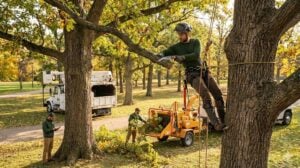
Yes—hiring a professional arborist improves safety and risk management compared with untrained attempts at tree work. Arborists perform formal tree risk assessments, use appropriate rigging and fall-protection systems, and coordinate crews to control debris and traffic at a job site. Risk mitigation includes documented inspections, secure rigging points, trained climbers, and contingency planning to protect structures, utilities, and bystanders. The list below outlines the core safety practices professional crews use.
The value of professional judgment in tree risk assessment is well described in arboricultural literature.
Arborist Expertise in Tree Risk Assessment
Professional judgment grows from training, hands-on experience, and situational awareness. Studies examining how expertise affects tree risk assessment show that trained arborists make more reliable evaluations and decisions—improving the quality and safety of risk-management outcomes.
Professional expertise and its role in risk assessment, RW Klein, 2021
- Structured risk assessment: A formal check of canopy, trunk, and site hazards before work starts.
- Rigging and controlled lowering: Ropes, blocks, or cranes are used when needed to control falling material.
- PPE and team protocols: Trained crews use protective gear and clear roles to keep everyone safe.
How Do Arborists Prevent Accidents and Property Damage During Tree Services?
Arborists prevent accidents through pre-job planning, on-site controls, and specialty equipment. Typical precautions include isolating the work area, clear crew communication, rigging systems to direct limb drops, and staging equipment to avoid contact with structures. Licensed, insured firms provide an added layer of homeowner protection because they typically carry coverage for on-site incidents and follow local permitting rules. These measures reduce collateral damage and help complex removals or large pruning jobs run smoothly and predictably.
What Emergency Tree Services Are Available After Storm Damage?
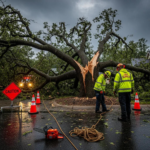
After storm damage, emergency tree services focus on removing immediate hazards, stabilizing the site, and rapid triage to protect people and remaining assets while documenting damage for insurance. Typical emergency actions include cutting dangerous hanging limbs, bracing or cabling partially damaged trees to delay removal when appropriate, and clearing access routes. Professionals prioritize hazards, secure the scene, and advise on next steps—scheduled restoration, full removal when needed, and help with insurance coordination. Quick, professional triage limits secondary damage and restores safer conditions faster.
Fast stabilization and clear documentation are especially valuable after storms when homeowners are managing safety, cleanup, and insurance claims.
How Can Professional Tree Care Increase Your Property Value and Enhance Curb Appeal?
Well-kept trees add market value and curb appeal by improving landscape balance, providing shade and energy savings, and signaling responsible property care to buyers. Professional pruning shapes trees for visual balance, opens sightlines, and removes unsightly or hazardous elements that lower perceived upkeep. Preserving mature trees and placing new ones strategically often boosts buyer interest and can support higher sale prices in competitive markets. The sections below explain how expert care supports both investment and appearance.
The financial and visual benefits work together: structural health preserves value while attractive, healthy trees improve everyday living and resale potential.
What Is the Impact of Expert Tree Care on Property Investment?
Professional tree care protects landscape assets, often avoiding the expense of premature removal and replacement while keeping canopy benefits like shade, privacy, and stormwater moderation. Studies show that well-maintained trees and yards can increase curb appeal and perceived value—though exact uplift varies by market and species. Regular professional maintenance also reduces long-term liability and replacement costs, improving return on investment when trees are a selling feature. For homeowners, this means prioritizing treatments that extend tree life and maintain function rather than waiting until costly corrective work is needed.
These investment points help set maintenance budgets and time care around local real estate plans.
How Does Tree Maintenance Improve Landscape Aesthetics?
Professional maintenance restores natural form, balances canopy mass, and keeps seasonal interest that complements hardscape and gardens. Form pruning corrects structural imbalances and improves sightlines; selective removals open space and reduce clutter for a cleaner look. Seasonal tasks—flowering tree care, palm frond cleanups, and careful canopy thinning—help the landscape look intentional and well cared for. Healthy, well-shaped trees send an immediate message of quality that enhances daily enjoyment and resale appeal.
Thoughtful aesthetic choices also guide long-term species selection and layout changes that sustain beauty and function.
What Are the Cost-Effectiveness and Convenience Benefits of Hiring a Professional Arborist?
Hiring a pro usually saves time and money by avoiding DIY mistakes, reducing property-damage risk, and delivering properly scoped work with clear timelines. Professionals bring the right equipment to speed complex jobs and prevent the repeated costs of amateur attempts or emergency fixes. Free estimates make it easy to learn the scope and budget without upfront expense. The table below summarizes common services and the cost drivers professionals manage to deliver better long-term value.
| Service Type | Time / Equipment / Risk | Cost-Influencing Factor / Benefit of Professional Service |
|---|---|---|
| Large tree removal | Requires cranes/rigging, high labor | Specialized equipment and experienced crews reduce job time and property risk |
| Stump removal / grinding | Heavy machinery, disposal | Efficient grinding prevents regrowth and avoids manual disposal costs |
| Pruning & maintenance | Skilled labor with saws and safety gear | Correct technique reduces future pruning needs and hazard risk |
This table shows how professional inputs convert to durable outcomes that often cost less across a tree’s lifecycle than repeated DIY attempts.
How Does Professional Service Save Time and Avoid DIY Risks?
Professional crews save time by sending trained teams with the right tools to do work that would take an untrained homeowner much longer and with higher risk. Common DIY errors include improper cuts that weaken trees, unsafe rigging that causes accidents, and poor debris handling that creates hazards. Professionals handle removals, controlled lowering, and cleanup so you don’t have to worry about manual labor or liability. The time saved also reduces disruption and lets you focus on other priorities while pros take care of the job safely.
What Should You Know About Free Estimates and Service Efficiency?
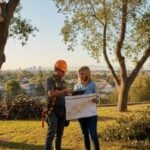
A quality free estimate typically includes an on-site assessment, a written scope of work, recommended treatments or removals, and a projected timeline—details that clarify cost and expectations before work begins. To help the arborist scope the job accurately, note your concerns, make the site accessible, and point out visible symptoms. Clear estimates let crews bring the right equipment, reduce change orders, and keep the job on schedule. Use estimates to compare approaches and confirm the recommended work aligns with long-term tree health goals rather than quick fixes.
Ask specific questions during the estimate to judge contractor competence and match services to your property objectives.
Why Is Pedro’s Tree Service the Trusted Choice for Arborist Services in El Cajon?
Pedro’s Tree Service is a local, family-owned team serving El Cajon and the greater San Diego area. We operate licensed, insured crews and offer a full range of maintenance and emergency services. Our focus is practical: free estimates, experienced crews, safety-first execution, and a 100% satisfaction promise. Services include routine trimming and maintenance, removals, stump grinding, palm work, and fire-prevention cleanups. Those commitments reflect the advantages described earlier—accurate diagnosis, safe work, and long-term planning that protect property and curb appeal. If you want local expertise, licensed crews, and a satisfaction-first approach, these are the traits to look for in a trusted provider.
This company overview ties back to earlier points about certification, safety, and preserving long-term tree value while keeping the focus on helping you choose wisely.
What Unique Value Propositions Does Pedro’s Tree Service Offer?
Pedro’s Tree Service highlights a few practical features that help homeowners decide: free estimates make expert advice accessible, licensed and insured crews protect homeowners during work, and comprehensive services cover everything from routine trimming to emergency response. Our local knowledge supports species‑specific care and scheduling that fits El Cajon conditions. For homeowners who want measurable commitments, our 100% customer satisfaction guarantee provides assurance that we’ll follow through. Reviewing these points during your first estimate helps match services to your property’s priorities.
These value propositions build on the technical benefits already discussed and make it easier to choose the right service during the estimate process.
How Do Customer Testimonials Reflect Pedro’s Commitment to Satisfaction?
Customer testimonials and project photos are important for validating a provider’s work—when they reference real clients and documented before/after images. The most useful testimonials describe specific outcomes, such as emergency removals handled safely, multi-year maintenance programs that kept trees healthy, or complex pruning jobs completed with clear communication. We encourage readers to review verified testimonials and project galleries on a provider’s site to confirm quality and reliability. Real customer stories and visual evidence help prospective clients judge expected results and service consistency.
- Get a clear estimate: Ask for a written scope and timeline before work starts.
- Confirm licensing and insurance: Make sure crews carry appropriate coverage and follow safety rules.
- Ask for documented examples: Look at photos and testimonials to verify quality and satisfaction.
Frequently Asked Questions
What should I look for when choosing an arborist?
Look for certification, experience, and local knowledge. Credentials from groups like the International Society of Arboriculture (ISA) show formal training. Ask about past work on the species common in your neighborhood, read reviews, and request references. A reputable arborist will explain methods clearly, provide a written estimate, and demonstrate a commitment to safety and best practices.
How often should I have my trees assessed by an arborist?
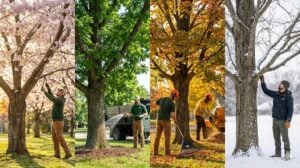
For most properties, an annual assessment is a good baseline—especially for mature trees or those with a history of issues. Trees in urban settings or exposed to severe weather may need more frequent checks. Seasonal inspections help time pruning and treatments for the best results.
What are the signs that my tree needs professional care?
Signs include broken or dead branches, significant leaning, discolored or early-dropping leaves, and unusual growth patterns. Evidence of pests—holes in the bark, sawdust-like frass, or oozing sap—also calls for an arborist. If a tree interferes with power lines or structures, professional pruning or removal is the safe option.
Can I perform tree care myself, or should I always hire a professional?
Simple tasks like watering and mulching are fine for homeowners, but pruning, diagnosing disease, and removals are best left to professionals. DIY work can unintentionally harm a tree or create safety hazards. Certified arborists have the training and gear to do the job correctly and safely—saving time and costly mistakes.
What is the typical cost of hiring a professional arborist?
Costs vary by service type, tree size and condition, and location. Typical homeowner jobs range from about $200 to $1,500 for pruning, removal, or emergency work. Get multiple estimates and ask what’s included. Many arborists offer free estimates so you can compare services and pricing before deciding.
How can I prepare for an arborist’s visit?
Note any concerns and visible symptoms, and make sure the arborist can access the trees and surrounding areas. Share any history of treatments or problems you know about. Prepare questions about recommended steps, timeline, and warranties so you leave the visit with a clear plan and estimate.
Conclusion
Hiring a professional arborist gives your trees the care they need to stay healthy, safe, and valuable. Certified, locally experienced arborists provide tailored solutions that protect property and improve curb appeal. By choosing a trusted local team like Pedro’s Tree Service, you get experienced crews, licensed and insured work, and a satisfaction-first approach. Contact us today for a free estimate and take the first step toward a healthier, safer landscape.