Homeowners face significant risks when attempting tree removal without full knowledge of the hazards, legal requirements, and correct techniques; common tree removal mistakes can lead to injury, property damage, and unexpected fines. This article explains the most frequent DIY mistakes, why professional tree removal reduces risk, and how local El Cajon permit rules affect projects. Readers will learn practical safety precautions, post-removal care such as stump grinding and root removal, emergency storm-response do’s and don’ts, and step-by-step guidance for getting a free estimate and scheduling services. The guide integrates evidence-based safety practices and local considerations for San Diego/El Cajon homeowners while offering clear next steps to obtain professional help when needed. If you want to reduce liability, protect landscaping, and avoid costly delays, the following sections walk through DIY dangers, regulatory pitfalls, mitigation strategies, and how licensed crews handle complex removals safely.
What Are the Most Common DIY Tree Removal Dangers for Homeowners?

DIY tree removal dangers are the routine mistakes homeowners make when they underestimate complexity, lack proper equipment, or ignore site-specific hazards, and these errors directly increase the chance of personal injury and property loss. The mechanism of harm usually combines incorrect cuts, unstable tree structure, and unexpected load shifts that send limbs or trunks in uncontrolled directions. Understanding these dangers helps homeowners decide when professional tree removal is necessary and how to reduce risk before any removal starts. The next list highlights the top, actionable dangers to watch for when considering a DIY removal.
Homeowners attempting DIY removals commonly encounter these primary hazards:
- Underestimating fall direction and treeweight: Misjudging how a tree will fall leads to structures, vehicles, or people being struck.
- Improper chainsaw use and lack of PPE: Using power tools without protective equipment increases severe injury risk.
- Hidden hazards such as rot or wires: Internal rot, embedded metal, or nearby electrical lines create unpredictable failure modes.
These dangers often interact—understanding those interactions points directly to which safety precautions are essential and when to stop and call a professional.
How Does Underestimating Tree Removal Complexity Lead to Injury and Damage?
Underestimating tree removal complexity means missing the structural factors that determine how a tree will behave when cut; lean, internal decay, multiple stems, and asymmetrical crowns all alter loading and fall patterns. When homeowners ignore leverage points such as hinge wood and compression zones, a seemingly small cut can cause a limb or trunk to pivot unpredictably, striking people or buildings. Anonymized case vignettes illustrate that even routine-looking street trees have hidden decay that converts a controlled cut into a catastrophic snap; recognizing complexity prevents these outcomes. Reviewing the tree’s lean, crown balance, and evidence of rot before cutting reduces surprises and points to when specialized rigging or a crane is required, which typically prompts hiring a licensed arborist for safe removal.
Introductory EAV table summarizes common DIY mistakes, their risks, and expected consequences to clarify decisions before any cutting begins.
Different DIY mistakes create distinct outcomes depending on the hazard and the site.
| Common Mistake | Specific Risk | Probable Consequence |
|---|---|---|
| Improper cuts | Uncontrolled limb or trunk fall | Personal injury, crushed property |
| Lack of PPE | Cuts, head injury, eye trauma | Hospitalization, long recovery |
| Ignoring hidden hazards | Electrocution, sudden collapse | Fatal or severe injury, infrastructure damage |
This table makes it easier to compare mistakes side by side and decide where the greatest risks lie, guiding whether a job is reasonable for DIY work or requires professional services.
Understanding these complexity factors leads into a second key issue: the safety gear and specialized equipment homeowners often skip when attempting tree cutting.
What Safety Precautions and Equipment Are Often Ignored in DIY Tree Cutting?
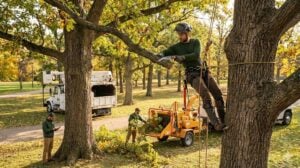
Many homeowners skip essential personal protective equipment (PPE) and fall-protection measures, creating avoidable injury risk; typical omissions include helmets, eye protection, chaps, gloves, and hearing protection when operating chainsaws. Beyond PPE, homeowners rarely have proper rigging gear, climbing equipment, or knowledge of safe cut sequences, which are necessary to control loads and prevent kickback or limb snap. Industry safety guidance from recognized authorities emphasizes that fall protection and proper chainsaw technique reduce serious injuries; following these protocols transforms a risky task into a managed one. Recognizing the limitations of typical homeowner toolsets and knowing what gear is required helps determine when to engage a licensed arborist for safe and efficient removal.
Proper safety planning and equipment use set the stage for understanding why professional crews are often the safer, more reliable option for complex or high-risk removals.
Why Is Hiring a Professional Tree Service Crucial to Avoid Costly Tree Removal Mistakes?

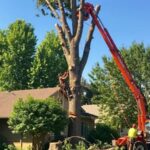
Hiring a professional tree service is crucial because licensed, insured teams bring assessed planning, specialized equipment, and coordinated safety procedures that dramatically lower the chances of injury, property damage, or regulatory trouble. Professionals evaluate structural risk, create a rigging plan, and use gear such as cranes, winches, and stump grinders to control outcomes when homeowners lack the tools or experience. The specific benefits include reduced liability through insurance, experienced crews that work faster and cleaner, and help with permit navigation—resulting in lower overall project risk and clearer cost expectations. Below are concise professional advantages that address common homeowner pain points and show why turning to trained arborists is often the best decision.
Professional tree removal delivers these main benefits:
- Safety and expertise: Trained crews use standard operating procedures and fall-protection systems to minimize injury.
- Liability protection: Licensed, insured teams reduce homeowner exposure to claims and unexpected damage costs.
- Efficiency and disposal: Professionals remove debris, grind stumps, and restore the site to minimize disturbance.
These advantages set up how licensed arborists operate on-site and why free estimates and emergency services play a pivotal role in homeowner decision-making.
How Do Licensed and Insured Arborists Ensure Safe and Efficient Tree Removal?
Licensed and insured arborists ensure safe removal by performing a systematic site assessment, which includes checking lean, decay, proximity to structures and power lines, and soil stability, then creating a stepwise removal and rigging plan. They use specialized equipment—rigging lines, lowering devices, aerial lifts, and stump grinders—to control cuts and remove components incrementally, reducing the chance of sudden failures. Insurance coverage and adherence to industry best practices from bodies like TCIA or ISA provide an additional layer of protection and procedural rigor that most homeowners cannot replicate. By coordinating with utility providers when necessary and documenting the scope, reputable crews reduce legal and financial risk while completing removals with minimal collateral damage.
Knowing what professionals examine during an assessment prepares homeowners for what to expect when scheduling a crew and leads naturally to understanding the value of transparent estimates and rapid emergency responses.
What Are the Advantages of Free Estimates and Emergency Tree Services from Professionals?
Free estimates give homeowners transparent scopes and written cost projections, reducing surprises and enabling informed comparisons of professional tree removal options; an estimator typically documents the scope, identifies hazards, and outlines permit needs.
Emergency tree services provide rapid hazard mitigation after storms or failures, prioritizing stabilization of trees that threaten structures or utilities and preventing secondary damage; quick triage can reduce insurance claims and further property loss. For urgent situations, prompt professional response limits risk to occupants and infrastructure and helps homeowners coordinate with electricians or municipal services as needed. If a homeowner needs fast assistance, contacting a licensed provider that offers free estimates and emergency availability ensures both clarity before work and rapid action when hazards present immediate danger.
What Local Tree Removal Permits and Regulations Must Homeowners in El Cajon, CA Follow?
Local tree removal permits in El Cajon and San Diego County can apply depending on tree location, species, and municipal codes; common triggers include street trees, heritage or protected species, and removals within certain setback areas. The mechanism behind these rules is municipal preservation of urban canopy and safety—some trees require review to prevent unauthorized removal or to ensure replacement planting. Homeowners planning removals should determine whether a permit applies before cutting because failure to comply can lead to fines, required remediation, or replacement obligations. The following EAV-style table summarizes typical permit-related entities, when they apply, and where to verify requirements in El Cajon.
Below is a compact table summarizing local permit considerations and practical guidance for homeowners.
| Permit Type / Concern | When It Applies | How to Check or Apply |
|---|---|---|
| Street or public-right-of-way trees | Any tree removing impacting sidewalk, curb, or street | Contact local public works or municipal tree division for approval |
| Heritage or protected species | Trees designated as historic or protected by ordinance | Submit application and documentation to city planning department |
| Close-proximity removals | Trees affecting utilities, easements, or protected setbacks | Verify via municipal code or ask a licensed arborist to confirm |
This table clarifies typical permit triggers and emphasizes that professionals can help identify when formal approval is needed and assist with paperwork to avoid penalties.
How Can Ignoring Permits Result in Fines and Delays?
Ignoring permits can lead to discretionary enforcement actions such as monetary fines, mandatory replanting or remediation, and stop-work orders that delay landscaping or construction projects. The reason authorities act is to protect public assets and maintain tree canopy, so unpermitted removals often trigger inspections and remediation timelines that extend project completion. Homeowners facing enforcement may be required to replace trees at prescribed sizes or species, pay mitigation fees, or obtain retroactive permits that can be more costly than compliant planning. Understanding permit requirements before work begins avoids these outcomes and helps preserve project timelines.
Where Can Homeowners Find Reliable Information on San Diego Tree Removal Laws?
Reliable information about El Cajon and San Diego tree regulations is available through official municipal planning and public works resources and local government code documents; checking city planning pages or contacting the city’s tree or public works division clarifies requirements for specific properties. Professional arborists experienced in the area can also verify permit applicability as part of a free estimate and may submit applications on the homeowner’s behalf, saving time and reducing administrative risk. Consulting official municipal sources and a licensed, insured tree service provides a two-pronged approach: authoritative documentation plus professional interpretation tailored to the site. Verifying requirements upfront reduces the likelihood of fines and contributes to smoother project execution.
Professional assistance with permits naturally transitions to considering how to protect property and prevent post-removal problems like stumps, roots, and pest issues.
How Can Homeowners Prevent Property Damage and Post-Removal Issues?
Preventing property damage and post-removal issues requires planning that covers stump management, root disruption, soil stabilization, and landscape restoration; neglecting these steps increases pest risk, regrowth, and interference with future landscaping projects. The mechanism of long-term damage typically involves leftover roots causing suckers or lifting hardscapes and neglected stumps harboring pests or creating trip hazards. Professionals often recommend stump grinding or root removal as part of a comprehensive removal plan to reduce these risks and preserve the integrity of nearby structures and plantings. The following table compares post-removal options to help homeowners decide on the best approach for their property.
Compare common post-removal options to understand trade-offs for cost, regrowth risk, and long-term outcomes.
| Post-Removal Option | Typical Cost Consideration | Outcome / Benefit |
|---|---|---|
| Leave stump in place | Lowest immediate cost | Increased regrowth and pest risk; trip hazard |
| Stump grinding | Moderate cost | Eliminates tripping, reduces regrowth, ready for replanting |
| Full root removal | Higher cost, more time | Minimizes pests and regrowth; best for construction or utility work |
This comparison helps weigh short-term savings against long-term landscape health and informs the decision to schedule stump grinding or full root removal.
What Are the Risks of Neglecting Proper Stump Grinding and Root Removal?
Neglecting proper stump grinding and root removal can allow regrowth and sucker shoots, attract wood-boring pests, and cause uneven settling that damages lawns, irrigation systems, or nearby pavements; these effects often appear gradually but carry cumulative costs. Roots left in place can also interfere with future construction or landscaping and may promote fungal growth that affects adjacent plants. Choosing grinding or removal early avoids gradual degradation of landscape aesthetics and prevents hidden costs associated with pest remediation or regrading. Because stump grinding and root removal require specialized equipment and disposal, hiring a professional for these tasks reduces disruption and ensures proper site restoration.
How Does Professional Planning Minimize Damage to Homes, Power Lines, and Landscaping?
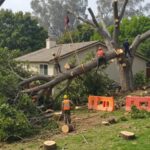
Professional planning minimizes damage through coordinated measures such as establishing exclusion zones, using barriers and cribbing, controlled rigging to lower heavy sections, and coordinating with utility companies when trees are near power lines. Professionals perform pre-job mapping of underground utilities and identify sensitive landscape features to preserve irrigation, decorative plantings, and hardscape elements. These measures reduce accidental costs and maintain usable outdoor spaces after removal, especially when crews include stump grinding and targeted root removal in the scope. Effective planning by professionals ensures a smoother restoration process and helps homeowners transition quickly to the next landscaping step.
Effective pre-job planning and utility coordination are especially critical following storms, which brings us to emergency response mistakes homeowners should avoid.
What Emergency Tree Removal Mistakes Should Homeowners Avoid During Storm Damage?
After a storm, emergency tree removal mistakes usually stem from impulsive actions, unsafe attempts to cut or move damaged trees, or failing to prioritize hazards like downed power lines—errors that can cause new injuries or escalate property damage. The reason these mistakes are common is that stress and urgency push homeowners to act before assessing stability or calling professionals with emergency experience. Recognizing when a situation is immediately dangerous and following a short decision guide reduces the chance of secondary harm. The following do/don’ts list clarifies common missteps and safer alternatives in storm-damaged conditions.
Homeowners should avoid these emergency mistakes and instead follow safer actions:
- Do not attempt to remove trees touching or near power lines: Always treat electrical hazards as immediate dangers and wait for utility professionals.
- Do not begin cutting without assessing structural stability: Unstable trees can collapse unpredictably during cutting.
- Do not move large debris without mechanical aid: Heavy sections require rigs or machinery to prevent injury and additional property damage.
Avoiding these missteps helps preserve safety until emergency professionals can stabilize the scene and perform controlled removals.
When Is It Necessary to Call Emergency Tree Services?
Call emergency tree services when a tree or limb is blocking egress, resting on a structure, causing an immediate threat to utilities, or when a damaged tree is unstable and likely to collapse; these conditions represent imminent hazards rather than routine maintenance issues. Immediate professional intervention reduces injury risk, prevents further structural damage, and provides rapid debris clearance to restore safety and access. While waiting for an emergency crew, homeowners should secure occupants, keep clear of the hazard area, and notify utility providers if lines are affected. Recognizing these clear indicators ensures the right response and faster coordination with professional crews.
How Do Professionals Handle Storm-Damaged Trees Safely and Quickly?
Professionals handle storm-damaged trees through a defined emergency protocol: triage to identify immediate hazards, stabilization of leaning or suspended components, controlled sectional removal using rigging or cranes, and debris management to clear access and limit further damage. Triage prioritizes trees that threaten public safety or critical infrastructure and sequences work to protect structures and utilities first. Rapid response crews bring specialized equipment and experience in high-risk cutting techniques, allowing them to reduce time on site while maintaining safety standards. Emergency availability and prompt scheduling are essential benefits of professional providers, as they minimize exposure to additional storms or shifting loads that could cause secondary failures.
After understanding emergency protocols, most homeowners want clear steps to secure an estimate and schedule safe tree removal services.
How Can Homeowners Get Started with Safe Tree Removal: Free Estimates and Scheduling Tips?
Getting started with safe tree removal begins with a site inspection and a written estimate that outlines scope, safety measures, and any permit requirements; this process defines expectations and clarifies costs before work begins. The mechanism for low-friction engagement is a short three-step process—inspect, estimate, schedule—that many local providers use to streamline decision-making for homeowners. Flexible scheduling and prompt service reduce the window of exposure to further risks, while clear communication of scope, timing, and site protections prevents misunderstandings. The short numbered list below provides the simple steps homeowners should follow to initiate safe, professional tree removal.
Follow these three steps to obtain a safe, professional removal:
- Request a site inspection: Provide property details and describe the tree’s condition so the estimator can prepare.
- Receive a written free estimate: Review scope, safety plan, and any permit guidance before approving work.
- Schedule the job: Choose a time that allows for utility coordination and any necessary site preparation.
What homeowners can expect during the on-site estimate is the next important detail that ensures transparency and readiness.
What Should Homeowners Expect During a Professional Tree Removal Estimate?
During an on-site estimate, expect the estimator to assess tree condition, proximity to structures and utilities, root and stump considerations, and potential permit needs, then produce a written scope that lists tasks, timeline, and any follow-up steps. The estimator will likely point out hazards, recommend stump grinding or root removal if necessary, and explain how the crew will protect landscaping and structures. This visit provides an opportunity to ask about insurance coverage, disposal methods, and emergency availability, all of which clarify the contractor’s approach. Receiving a clear, written estimate reduces surprises and allows scheduling that aligns with homeowner needs.
How Does Flexible Scheduling and Prompt Service Benefit Homeowners?
Flexible scheduling and prompt service benefit homeowners by minimizing the period that a hazardous tree poses risk, allowing removal at times that limit disruption, and enabling prioritization for emergency or weather-sensitive situations; this adaptability supports both safety and convenience. Prompt scheduling helps prevent secondary damage from subsequent storms and reduces the potential for unauthorized DIY attempts made out of urgency. When contractors offer flexible windows and emergency availability, homeowners can coordinate with other trades or insurance adjusters to streamline remediation. Choosing a provider that balances timely response with safe procedures ensures removals complete efficiently and with minimal homeowner burden.
If you decide to move forward, Pedro’s Tree Service provides free estimates and emergency availability to help El Cajon homeowners schedule safe removals and request stump grinding or root removal as part of a comprehensive plan; call 619-257-2458 to request a free estimate or emergency assistance.
Frequently Asked Questions
What should I do if I suspect a tree is unstable after a storm?
If you suspect a tree is unstable after a storm, it’s crucial to prioritize safety. Avoid approaching the tree and keep a safe distance, especially if it’s leaning or has fallen onto power lines. Contact a professional tree service immediately to assess the situation. They have the expertise and equipment to safely evaluate and remove the tree if necessary. Do not attempt to stabilize or cut the tree yourself, as this can lead to further injury or damage.
How can I identify if a tree needs to be removed?
To determine if a tree needs to be removed, look for signs of decay, such as dead branches, cracks in the trunk, or fungal growth at the base. Additionally, if the tree leans significantly or has exposed roots, it may pose a risk. A professional arborist can conduct a thorough assessment to evaluate the tree’s health and structural integrity, providing recommendations on whether removal is necessary for safety or aesthetic reasons.
What are the costs associated with professional tree removal services?
Professional tree removal cost can vary widely based on several factors, including the tree’s size, location, and condition, as well as the complexity of the removal process. On average, homeowners can expect to pay between $200 to $2,000 for tree removal. Additional services, such as stump grinding or emergency response, may incur extra charges. Obtaining a detailed estimate from a licensed tree service will provide clarity on the total costs involved.
Are there specific times of year that are better for tree removal?
Yes, the best time for tree removal typically depends on the tree species and local climate. Generally, late fall and winter are ideal for tree removal, as trees are dormant, making them easier to cut and reducing the risk of damage to surrounding plants. However, if a tree poses an immediate hazard, it should be removed regardless of the season. Consulting with a professional arborist can help determine the best timing for your specific situation.
What should I do with the tree stump after removal?
After tree removal, homeowners have several options for dealing with the stump. The most common methods include stump grinding, which reduces the stump to below ground level, or full root removal, which eliminates the stump and roots entirely. Leaving the stump in place can lead to regrowth and pest issues. Choosing the right method depends on your future landscaping plans and the stump’s location. Consulting with a professional can help you make the best decision.
How can I ensure my property is protected during tree removal?
To protect your property during tree removal, ensure that the tree service you hire conducts a thorough site assessment. They should establish exclusion zones, use protective barriers, and coordinate with utility companies if necessary. Discuss your concerns with the arborist before the job begins, and ensure they have a clear plan for minimizing damage to surrounding structures and landscaping. A reputable professional will prioritize safety and take steps to safeguard your property throughout the process.
What are the signs that I need to hire a professional for tree removal?
Signs that you should hire a professional for tree removal include visible decay, leaning trees, or branches that pose a risk to structures or power lines. If you lack the proper equipment or experience to safely remove a tree, it’s best to call in experts. Additionally, if the tree is large or in a difficult location, professional arborists have the skills and tools to handle the job safely and efficiently, reducing the risk of injury or property damage.
Conclusion
Understanding the risks and complexities of tree removal empowers homeowners to make informed decisions that prioritize safety and compliance. By recognizing the value of professional services, you can mitigate potential hazards and ensure a smoother removal process. Don’t hesitate to reach out for a free estimate and expert guidance tailored to your specific needs. Explore our services today to protect your property and enhance your landscaping.