Certified arborists are trained tree-care pros who know tree biology, how to spot hazards, and the safest ways to remove trees without damaging property or putting people at risk. This guide explains how an ISA-certified arborist lowers risk, preserves healthy trees when possible, handles permits and insurance details, and protects your landscape value while avoiding surprise costs. If you’re unsure when a tree needs removal, how removal affects curb appeal, or which permits apply in San Diego or El Cajon, this article gives clear decision points, safety practices, and local considerations. You’ll learn what certification proves, how arborist training changes removal results, how pros decide between saving or removing a tree, how proper removal protects property value, and what paperwork homeowners should ask for before work starts. We also include practical next steps for hiring local help and how to request a free on-site estimate from a licensed, insured provider when you’re ready.
What Is a Certified Arborist and Why Is Their Expertise Crucial for Tree Removal?
An ISA Certified Arborist has passed an industry exam and keeps current with continuing education. That matters because tree removal decisions rely on biology and risk assessment—not just tree size. Certification shows the arborist understands root systems, structural defects, proper pruning standards, and species-specific issues, so they can pick removal methods that avoid needless damage. When removal is needed, a certified arborist will recommend methods—sectional dismantling, rigging systems, or crane-assisted lifts—based on yard layout, tree condition, and nearby utilities to reduce hazards. Knowing the certification baseline helps you ask the right questions and avoid inexperienced crews that could raise liability or harm your landscape.
What Qualifications Define an ISA Certified Arborist?
An ISA Certified Arborist earns the credential by passing an exam that tests practical tree-care knowledge, safety, and ethics. Certification usually reflects formal study plus hands-on experience, and it requires ongoing education so the arborist stays current with best practices. While it doesn’t replace local licensing or insurance, the ISA credential signals a commitment to industry standards and to ANSI A300 pruning and maintenance guidelines where applicable. Ask any contractor for proof of their ISA credential and recent training so you can be sure recommendations are based on science and experience—not guesswork.
How Does Arborist Training Improve Tree Removal Outcomes?
Training gives arborists the diagnostic skills and rigging knowledge needed to plan removals that protect buildings, soil, and nearby plants. Trained pros read decay, included bark, and root problems to predict failure points and decide whether to dismantle a tree in sections or bring in a crane. In tight yards or near power lines, experienced crews reduce collateral damage with controlled lowering, rope systems, and aerial lifts, which keeps restoration costs down. Hiring a trained team means clearer scopes of work, reliable cleanup, and better preservation of desirable trees and landscape features.
For homeowners who want an on-site assessment from a trained local team, Pedro’s Tree Service offers certified-arborist-level inspections and free estimates. Our crews evaluate tree health and removal options, outline safe, cost-effective approaches, and often identify alternatives to full removal. A short, no-obligation visit can clarify whether treatment, pruning, or other steps are a better choice for your property.
How Does Hiring a Certified Arborist Enhance Safety During Tree Removal?

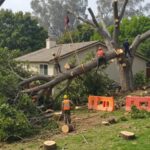
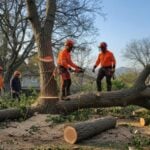
Certified arborists put risk assessment, proven safety protocols, and the right equipment into every job to reduce injuries and property damage. A proper evaluation identifies structural defects, tension zones, and environmental factors that influence cutting strategy, then lays out controls like exclusion zones and traffic management. Using industry-approved tools—rigging systems, harnesses, aerial lifts, and PPE—trained crews manage fall hazards and unexpected tree behavior. Because safety planning is methodical, homeowners see fewer surprises and lower repair costs than with makeshift removals.
- Comprehensive job site assessment: A pre-job inspection finds hazards, escape routes, and needed controls before any cutting starts.
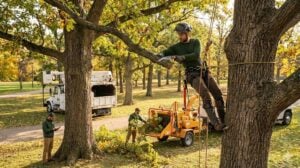
- Use of PPE and fall protection: Certified crews wear helmets, eye protection, gloves, and harnesses during aerial work.
- Controlled rigging and sectioning: Rigging and sectional removal prevent uncontrolled drops and protect structures and plantings.
- Traffic and exclusion zone management: Barriers and signage keep neighbors, pets, and vehicles clear of the work area.
These steps form a coordinated safety system that reduces accidents and property damage and makes complex removals possible in tight or hazardous locations.
Below is a quick reference showing common roles, the equipment they use, and why each is important on a professional crew.
| Role | Equipment / Protocol | Purpose |
|---|---|---|
| Aerial Technician | Helmet, harness, climbing rope, carabiners | Keeps workers safe while working in the canopy and prevents falls |
| Rigging Crew | Rigging line, pulleys, lowering straps | Controls heavy branches during sectional removal to protect structures |
| Ground Support | Exclusion zone barriers, chainsaws, hand tools | Keeps bystanders safe and helps with controlled felling and cleanup |
| Equipment Operator | Aerial lift or crane, stabilizers | Provides a stable platform or lifting power for heavy or tight removals |
Ask that similar controls appear in any written quote so you know the crew will work safely and professionally.
What Safety Protocols Do Certified Arborists Follow to Prevent Injuries?
Certified arborists use a sequence of safeguards—site assessment, PPE, fall protection, and task-specific rigging—that together lower the chance of worker injury and accidental damage. Pre-job planning includes locating utilities, mapping descent routes, and setting clear communication among crew members to handle unexpected shifts in tree behavior. Crews follow ANSI standards and industry checklists for equipment inspection, rope checks, and rescue planning, and they bring first-aid and emergency response plans tailored to the site. These layered measures protect workers and residents and keep projects moving with minimal downtime and insurance risk.
A consistent tree risk-assessment process, with careful site evaluation and hazard identification, is key to preventing injuries and property damage during removal work.
Evaluating Tree Risk Assessment Reproducibility for Arborists
This study looks at commonly used tree risk-assessment methods and how consistent results are across trained arborists. Different methods and timeframes can affect decisions, and the research compares assessments by arborists with TRAQ or QTRA training to those using other standard approaches to explore reproducibility and practical impacts on risk rating.
How Do Certified Arborists Minimize Property Damage and Manage Hazards?
To limit property damage, certified arborists use directional cuts, sectional dismantling, and mechanical lifts or cranes when drop zones are small, so large pieces never free-fall onto buildings or landscapes. Protective steps include laying mats to prevent soil compaction, using rigging to lower limbs through narrow gaps, and coordinating with utility companies when lines are nearby. Pre-job documentation—photos, site notes, and a written protection plan—reduces dispute risk and clarifies responsibilities if anything goes wrong. Ask contractors for a clear site-protection plan and check whether they include it in the written estimate.
Using a quantified approach to tree risk assessment can give a numerical estimate of risk, which helps property owners set acceptable safety limits.
Quantified Tree Risk Assessment for Amenity Trees
This system assigns probabilities to components of tree-failure hazards so inspectors can calculate a numerical risk estimate. Quantifying risk helps owners and managers make decisions that keep risk at or below a chosen, reasonable level.
In What Ways Do Certified Arborists Improve Tree Health Assessment and Preservation?
Certified arborists bring species knowledge, diagnostic testing, and integrated care strategies to treat problems before removal becomes necessary. They use visible decay signs, pest identification, and targeted sampling to tell treatable issues from irreversible structural failures. When preservation is possible, arborists may recommend pruning, bracing, or pest-management plans that extend a tree’s life while keeping safety in mind. This triage approach helps homeowners keep valuable, mature trees and removes only those that pose unacceptable risk.
How Do Arborists Diagnose Tree Diseases and Pest Infestations?
Arborists inspect leaves, bark, roots, and growth patterns and use lab tests when needed to identify pathogens or nutrient problems. Common Southern California issues—like root rot, wood-decay fungi, or insect pests—require different responses, and a trained arborist can tell when treatment will work versus when decline is too advanced. Treatments range from precise pruning and soil care to chemical or biological controls done according to local rules to protect other plants and wildlife. After diagnosis, the arborist will explain expected results and monitoring timelines so you can weigh treatment against removal.
When Should a Tree Be Removed Versus Preserved?
The choice to remove or preserve a tree depends on clear risk and health factors: imminent structural failure, widespread decay, severe root damage, heavy pest or disease impact, or a tree’s placement that threatens structures or utilities usually justify removal. Preservation makes sense when a tree has strong ecological or aesthetic value, defects can be mitigated, and the site supports safe retention at a reasonable maintenance cost. A certified arborist weighs the likelihood of failure, the possible consequences, and whether mitigation is practical before recommending removal. The checklist below translates technical findings into homeowner-friendly decision points.
- Severe structural defects or multiple large cracks — high failure risk that may require removal.
- Extensive root damage near foundations or utilities — often rules out safe retention.
- Widespread decay or terminal disease — when treatment can’t reliably restore safety.
- Mitigation (bracing, pruning) reduces risk to acceptable levels — preservation is preferable.
This checklist helps turn an arborist’s assessment into clear action steps and sets homeowner expectations for recommendations. Specialized tools and data analysis are sometimes needed for full risk assessment, especially for valuable trees or complex situations.
Tree Risk Assessment: Specialized Equipment and Data Analysis
When a basic inspection isn’t enough, tree risk assessors use specialized tools, additional data collection, and analysis to evaluate risk—especially for habitat or high-value trees where more precision is needed.
How Does Professional Arborist Tree Removal Increase Property Value and Curb Appeal?
Professional arborist work boosts curb appeal and property value by keeping healthy trees safe and removing poorly placed or hazardous trees that detract from a yard. Proper pruning, selective removals, and stump grinding improve sightlines, lawn health, and the overall look of a property—signals buyers interpret as lower future maintenance risk. Preserving healthy specimen trees while removing problem trees often has a net positive effect on perceived value. Working with arborists and landscape designers together can create cohesive upgrades that maximize appearance and market appeal.
The table below links common arborist services to homeowner benefits so you can see how specific work translates to real value.
| Service | Outcome | Property Impact |
|---|---|---|
| Selective pruning | Stronger tree structure and neater appearance | Better curb appeal and lower risk |
| Tree removal + stump grinding | Cleared space and safe ground | More usable yard and improved look |
| Risk assessment | Prioritized mitigation plan | Less liability and fewer insurance concerns |
| Preservation treatments | Longer tree life and improved health | Ongoing landscape value |
This mapping shows how each service produces clear homeowner benefits so you can prioritize work that fits resale or design goals.
What Impact Does Expert Tree Care Have on Real Estate Value?
Good tree care improves first impressions, signals proper maintenance, and reduces perceived risk from overgrown or failing trees—factors that can influence buyer interest and offers. Healthy, well-placed mature trees increase curb appeal; conversely, hazardous trees can lead buyers to request price reductions or removal credits. Documentation of recent assessments, permits, and completed work reassures buyers and appraisers that liabilities are handled. If you’re selling, targeted arborist services often deliver strong returns by improving curb appeal and avoiding buyer objections.
How Do Certified Arborists Enhance Landscape Design and Appearance?
Arborists help align tree species, form, and maintenance with long-term landscape goals. We coordinate with designers to place or remove trees in ways that balance beauty and function, taking into account mature crown spread, root behavior, and future maintenance needs. Regular pruning preserves intended shape and sightlines, while strategic removals open space for new plantings that fit the design. When arborists and designers work together, landscapes look intentional, age well, and have predictable upkeep.
Why Is Legal Compliance and Insurance Important When Hiring a Certified Arborist?
Permits, utility coordination, and liability exposure make legal compliance and insurance essential for tree removal. Hiring a licensed, insured pro ensures the paperwork is handled properly and protects homeowners financially if something goes wrong. Permits may be required for protected species, street trees, or work in special zones—an experienced arborist will help determine what applies and guide you through the process. Insurance—general liability and workers’ compensation—protects you from financial responsibility for on-site damages or injuries. Ask for licenses, permits, and insurance certificates up front so responsibilities are clear and unexpected costs are less likely.
Local rules vary, and an arborist’s role often includes coordinating permits and notifying utilities. The table below summarizes common permit types and a typical San Diego-area process.
| Permit Type | When Required | Typical Process in San Diego |
|---|---|---|
| Protected/specimen tree permit | Removing designated protected trees or species | Submit an application with an arborist report to city planning and wait for approval |
| Street tree permit | Work on trees in the public right-of-way | Coordinate with public works and follow municipal contractor requirements |
| Coastal or special overlay permits | Properties in regulated zones | Additional reviews and documentation required by local authorities |
What Local San Diego Permits and Regulations Affect Tree Removal?
San Diego and El Cajon can require permits for removing protected trees or work in the public right-of-way; rules depend on species, trunk size, and location. A certified arborist documents tree condition, prepares removal justification, and helps with the submission steps and timelines to smooth approval. Bringing an arborist in early avoids stop-work orders or rework if inspections are required after removal. Ask for permit assistance up front to ensure compliance and prevent enforcement headaches later.
How Do Licensed and Insured Arborists Protect Homeowners?
Licensed, insured arborists protect homeowners by carrying liability insurance for property damage and workers’ compensation for jobsite injuries, which prevents homeowners from being directly liable for most on-site incidents. Request insurance certificates and confirm coverage types and limits so you know who pays if something happens. Licensing shows the contractor meets local business and trade requirements. Certified crews also keep documented safety procedures and incident-response plans that reduce risk and help manage claims quickly if needed. Asking for these documents before work starts is a simple, important protection.
How Can Pedro’s Tree Service Provide Trusted Certified Arborist Tree Removal in El Cajon and San Diego?
Pedro’s Tree Service is a family-owned local company serving El Cajon and San Diego with tree removal, maintenance, emergency response, and stump grinding. We emphasize licensed, insured work and stand behind our customer satisfaction. Our teams combine local species knowledge with professional safety practices and equipment to assess and complete jobs that fit San Diego site conditions. We offer free estimates and emergency response so homeowners can get an on-site evaluation when hazards appear. To request a free estimate, contact us by phone or email and we’ll schedule a consultation.
What Unique Benefits Does Pedro’s Tree Service Offer as a Family-Owned Certified Arborist Provider?
As a family-owned business, we provide responsive, community-focused service and deep local knowledge of San Diego species and permit rules, while operating as a licensed and insured contractor. Our services include tree removal, routine maintenance, emergency response, and stump grinding, and our crews use quality equipment to meet professional safety standards. Family ownership means hands-on attention and local accountability, while licensing and insurance give homeowners practical protection during complex work. Together, these qualities offer reliability, local expertise, and clear protections.
How Can Homeowners Get Free Estimates and Schedule Expert Tree Removal Services?
To request a free estimate from Pedro’s Tree Service, call the phone number listed, send the company email, or use the contact options on our site. We typically schedule an on-site visit to assess tree health, structure, and site constraints, then provide a written recommendation and tree removal cost estimate that outlines permits, safety measures, and a timeline. For emergencies, we offer prioritized response. We document scope and protections in the estimate to reduce misunderstandings and help you compare options.
- Call to schedule: Use the listed phone number to request a free on-site estimate for removal or emergency help.
- Email for documentation: Send photos and location details to the company email to begin the assessment.
- Expect site visit: A trained crew member will do a risk assessment, review options with you, and deliver a written estimate.
These steps make it straightforward to compare options and choose a certified approach that fits your schedule and budget.
This guide covered certification, safety, diagnosis, preservation choices, property impact, permit considerations, and how to request a local assessment. If you need a certified-arborist inspection or a free estimate for removal or emergency service in El Cajon or San Diego, reach out to the local provider information above to schedule a site visit and get advice tailored to your property.
Frequently Asked Questions
What are the signs that a tree needs to be removed?
Look for large trunk cracks, many dead branches, mushroom or fungal growth at the base, or obvious lean and root damage. Trees that threaten structures, utilities, or people often need removal. When in doubt, have a certified arborist inspect the tree to decide if removal is necessary or if preservation is an option.
How can I ensure the arborist I hire is qualified?
Check for ISA certification and ask for proof of continuing education. Verify local licenses and insurance, and read reviews or ask for references. A qualified arborist should provide documentation of credentials and explain their process clearly.
What should I expect during a tree removal estimate?
An arborist will do an on-site assessment of tree health, structure, and surroundings, discuss risks and removal methods, and note any required permits. You should receive a written estimate that spells out scope, safety measures, costs, and a timeline. The arborist should also explain how they will protect your property during the work.
Are there any environmental considerations when removing a tree?
Yes. Arborists consider wildlife habitat, soil health, and adjacent plants when recommending removal. They may suggest alternatives like pruning or treatment, and will inform you about local regulations for protected species or habitats. Discuss these issues with your arborist to align work with environmental best practices.
What are the costs associated with hiring a certified arborist?
Costs vary with tree size, location, condition, and removal complexity. Permits, specialized equipment, and cleanup can add to the price. You’re paying for expertise, safety, and liability protection. Getting multiple estimates helps you compare services and find the best fit for your budget.
How can I maintain the health of my remaining trees after removal?
Water during dry periods, mulch to retain moisture, and avoid compacting soil around roots. Inspect trees regularly for pests or disease and schedule preventive pruning as needed. When in doubt, ask an arborist about treatments or a care plan to keep your trees healthy.
Conclusion
Hiring a certified arborist for tree removal in San Diego gives you greater safety, proper permitting, and better protection for your landscape’s value. Their training reduces risk and improves outcomes so you can feel confident in the results. Contact Pedro’s Tree Service today for a free estimate and expert, local guidance tailored to your property. Call us now or book your free consultation online to get started!