Stress-free tree removal means removing danger and uncertainty from your property by using proven assessment methods, safe procedures, and clear cost and permit guidance tailored to San Diego and El Cajon conditions. This guide explains when a tree requires removal, how professional tree removal service workflows operate, what costs and permits homeowners should expect, and how to prepare for both planned and emergency removals. Many homeowners worry about safety, hidden fees, or permitting delays; by outlining visual hazard signs, step-by-step professional processes, and local permit considerations, this article reduces those unknowns and empowers you to act confidently. The next sections cover hazard indicators and health assessments, the professional removal process used locally, cost breakdowns and El Cajon permit checkpoints, emergency protocols and immediate homeowner actions, reasons to choose a licensed provider, and practical pre- and post-removal options like stump grinding and replanting. Throughout, you’ll find checklists, comparison tables, and clear next steps so you can assess a situation yourself and know when to contact a professional tree removal company for a free estimate or site visit.
When Should You Consider Tree Removal? Signs and Safety Concerns for Homeowners
Tree removal becomes necessary when a tree poses a clear risk to people or property, when disease or structural failure makes saving the tree impractical, or when its location and health conflict with landscape or utility needs. Recognizing these conditions early prevents accidents, reduces repair expenses, and preserves neighborhood safety and the urban canopy when possible. Homeowners should balance monitoring and mitigation against decisive removal; in many cases a certified inspection clarifies whether pruning, treatment, or full removal is the correct option. The following subsection lists common signs of hazardous trees that justify contacting a professional for assessment, and that list is followed by an explanation of how overall tree health affects the removal decision.
What Are the Common Signs of a Hazardous Tree?
Hazardous trees show specific visible and structural indicators that suggest imminent failure or elevated risk to people and structures. Look for dead or hanging branches, large trunk cracks or cavities, sudden or progressive lean away from the root flare, visible root upheaval or heaving near foundations, and fungal growth such as conks indicating internal decay. These signs often occur in combinations that multiply risk — for example, a lean plus root damage is more concerning than either alone — and should trigger immediate safety measures like cordoning off the fall zone. If multiple signs appear, calling a professional tree removal service for a timely inspection will clarify urgency and next steps while protecting occupants and nearby assets.
Assessing Structural Defects and Risks in Urban Trees
Urban forests require an assessment of their trees’ structural defects, as well as the risk they represent.Objective:To identify the defects and risks of the trees in San Juan de Aragon Forest in Mexico City.Materials and methods:Twenty-eight circular plots of 0.1 ha were randomly established. Diameter at breast height, total height and slenderness index were measured in each tree. Structural defects were identified and a risk rating (RR) was obtained at the individual, species and section level using the methods of Matheny and Clark, and Dunster.
Identification of defects and risks in trees of San Juan de Aragon Forest, Mexico City, 2019
How Does Tree Health Affect Removal Decisions?
Tree health determines whether a tree is salvageable through treatment or requires removal to prevent failure, and professionals use health indicators and disease progression to make that call. Trees with treatable issues — isolated pest infestations or minor canopy dieback — may recover with pruning, fertilization, or targeted treatments, while widespread root rot, structural failure, or advanced disease often justify removal to protect life and property. A certified arborist or licensed tree removal company can assess the tree’s structural integrity, estimate remaining lifespan, and present treatment versus removal options, letting homeowners make informed decisions. Understanding the health-based rationale for removal leads naturally to the next topic: how trained crews perform safe, efficient removals when removal is the chosen solution.
How Does the Professional Tree Removal Process Work in El Cajon?
Professional tree removal in El Cajon follows a predictable workflow designed to maximize safety, comply with local regulations, and set homeowner expectations for time and cost. The process begins with an on-site assessment and written estimate, includes permit checks where applicable, moves through a safety-focused removal plan and execution with proper rigging and equipment, and finishes with debris removal, stump grinding options, and site cleanup. Each step assigns responsibilities to crew members, the arborist, and the homeowner to ensure clear outcomes and maintain timelines.
This table outlines the typical workflow for professional tree removal and clarifies what homeowners can expect during each stage.
| Process Step | Responsibility (crew/arborist/homeowner) | Expected Outcome / Timeframe |
|---|---|---|
| Site Assessment & Quote | Arborist / Crew | Written estimate and risk plan; same-day to 3 days |
| Permit Check & Scheduling | Arborist / Company | Permit filed if required; scheduling within 1–14 days |
| Safety Setup & Rigging | Crew | Controlled drop zones and traffic control; hours to a day |
| Sectional Removal & Felling | Crew with Arborist oversight | Safe removal of tree sections; time varies by size |
| Debris Removal & Chipping | Crew | Site cleared and chips removed or offered to homeowner; same day |
| Stump Grinding / Final Cleanup | Crew / Homeowner choice | Stump ground to below grade; 1–3 hours depending on stump |
This process table sets clear expectations: professional teams manage technical steps while homeowners provide access and decisions on cleanup, leading into the specific safety steps professionals use during removal.
What Are the Key Steps in Safe Tree Removal?
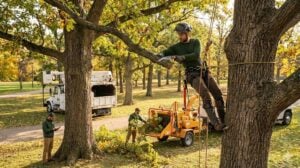
Safe tree removal starts with planning and risk assessment, then proceeds through controlled execution steps that protect people and property at every stage. Crews identify fall zones, secure a protective perimeter, coordinate any necessary traffic or pedestrian control, and use staged removal from the canopy down with rigging to lower sections safely. Professionals employ personal protective equipment and follow standards for cutting, rigging, and equipment operation to minimize chance of damage or injury. Homeowners should stay informed about the work plan, move vehicles and valuables clear of the site, and follow crew guidance during active removal to maintain safety and efficient progress.
The comprehensive training and operational procedures for tree care professionals are detailed in specialized manuals, ensuring that all aspects of safe and efficient tree removal are covered.
Tree Care Professional Training Manual: Skills and Operations
ABSTRACT: This manual is designed to prepare students for entry-level positions as tree care professionals. Addressed in the individual chapters of the guide are the following topics: the tree service industry; clothing, eqiupment, and tools; tree workers; basic tree anatomy; techniques of pruning; procedures for climbing and working in the tree; aerial lifts; tree identification; identification and treatment of tree problems; and other tree care operations. Appendixes to the manual contain first aid procedures and lists of selected common plants of North America, followed by references and a glossary. Each chapter begins with a set of objectives followed by instructional text. (MN)
The Tree Worker’s Manual., 1985
What Equipment Is Used for Efficient and Safe Tree Removal?
Efficient professional removals rely on specialized equipment selected for the job’s scope, location, and risk profile, and crews match tools to scenarios to preserve safety and speed. Common equipment includes chainsaws for cutting, wood chippers for reducing large limbs to manageable chips, stump grinders for removing roots, aerial lifts or bucket trucks for high canopy access, and cranes for extremely large trees near structures or confined spaces. Proper personal protective equipment, rigging gear, and traffic-control tools complete the safety toolkit that distinguishes professional crews from DIY attempts. Understanding this equipment helps homeowners appreciate why hiring trained professionals often reduces time, risk, and unexpected costs.
What Are the Costs and Permit Requirements for Tree Removal in San Diego?
Costs for tree removal in San Diego vary by species, size, location, and complexity, and local permit rules can affect timing and scope; transparent estimates help homeowners compare options and avoid surprises. Typical baseline removal can range from modest single-tree jobs to complex crane-assisted removals, with price drivers including trunk diameter, proximity to structures or lines, required equipment, access limitations, and disposal needs. The table below compares common tree types and job attributes with typical cost ranges to give homeowners a realistic starting point for budgeting and planning. After the table, the following subsection outlines permit considerations specific to El Cajon and how to check whether a permit is required before scheduling work.
The following cost comparison shows typical price ranges for common Southern California tree types and common job attributes to help homeowners estimate potential expenses.
| Tree Type | Attribute (size / complexity / proximity to structure) | Typical Cost Range |
|---|---|---|
| Palm | Small, accessible (single-trunk) | $300 – $800 |
| Oak | Medium, requires sectional removal | $700 – $1,800 |
| Eucalyptus | Large, high canopy, near structure | $1,000 – $3,000+ |
| Any species | Confined access / crane required | $2,000 – $6,000+ |
| Any species | Stump grinding (per stump) | $150 – $600 |
This table provides baseline expectations; actual costs depend on site-specific factors and should be clarified in a written estimate that lists inclusion of stump grinding, chip removal, and permit handling.
How Much Does Tree Removal Cost in San Diego by Tree Type and Size?
Estimating cost begins with trunk diameter, species characteristics, and site complexity, and homeowners should expect specific modifiers such as crane needs, confined access, or hazardous proximity to structures. For example, smaller palms are often less expensive due to confined removal needs, while large oaks or eucalyptus with heavy limbs and structural decay demand more labor, time, and equipment, pushing prices higher. Disposal, stump grinding, and hauling add to the total; requesting an itemized written estimate clarifies what is included and prevents surprises. When comparing bids, look for clear breakdowns of labor, equipment rental, permit fees, and cleanup to understand how each factor influences price.
What Permits Are Needed for Tree Removal in El Cajon?
Permit requirements in El Cajon and broader San Diego County depend on tree species, protected status, and location; certain heritage or protected trees may require city approval before removal. Homeowners should check local municipal guidelines for protected species and tree removal thresholds, and professionals often include permit checks as part of the assessment to determine whether an application is necessary. If a permit is required, the process typically involves documentation of tree condition, photos, and reasons for removal; professionals can assist with paperwork and saving homeowners time. When permits are uncertain, hiring a licensed, insured provider ensures the city communication and compliance steps are handled correctly, which keeps projects on schedule.
How to Handle Emergency Tree Removal Services in San Diego?
Emergency tree removal addresses immediate hazards created by storm damage, sudden structural failure, or trees impacting homes, vehicles, or utilities, and swift, safe triage is the priority. Immediate homeowner safety steps include staying clear of the scene, calling emergency services if life or active power-line contact exists, and contacting professional emergency responders for rapid assessment and stabilization. Professionals typically triage to secure the area, coordinate with utility companies when lines are involved, stabilize the tree if needed, and then perform prioritized removal to remove the imminent threat. The checklist below presents immediate actions homeowners should take in an emergency, followed by an explanation of how emergency providers respond and what homeowners can expect during an urgent callout.
When a tree creates an immediate threat, follow these priority actions before professionals arrive:
- Evacuate the danger zone: Move away from the tree and any damaged structures to a safe area.
- Contact emergencyservices if life or active utilities are at risk: Call 911 when there is immediate danger to life or public safety.
- Avoid touching downed trees near power lines: Treat any downed or hanging power lines as live and maintain distance.
- Call a professional emergency tree removal service for rapid triage: Request an urgent assessment to stabilize the scene and schedule removal.
These steps secure people first, then property, and they transition into the professional triage and stabilization processes that follow.
What Are the Signs That You Need Emergency Tree Removal?
Certain signs require immediate action: a tree that has fallen on a structure, active splitting of a trunk, significant root plate uplift indicating imminent collapse, or any tree making contact with power lines. In these scenarios, the greatest risks are to human safety and critical infrastructure, so prompt evacuation and emergency service notification are essential. Homeowners should prioritize calling utility providers when power lines are involved and then summon a professional emergency tree removal team to coordinate safe removal and stabilization. Recognizing these urgent signs accelerates response and reduces the chance of escalating damage.
How Does Pedro’s Tree Service Respond to Emergency Tree Removal Requests?
Pedro’s Tree Service provides rapid emergency triage and prioritized removal for urgent tree failures, operating with a safety-first approach, licensed crews, and experience in storm and structural failure response. Their emergency workflow typically includes intake to assess severity, on-site stabilization to prevent further collapse, coordinated removal of hazardous sections, and expedited cleanup to restore safe conditions; after stabilization, they follow up with recommended next steps such as stump grinding or replanting options. To generate leads by encouraging visitors to contact them for free estimates and to schedule tree services. Homeowners can expect clear communication about timelines, an emphasis on securing the immediate hazard, and post-job documentation that helps with insurance or municipal follow-up.
Why Choose Pedro’s Tree Service for Stress-Free Tree Removal in El Cajon?
Choosing a licensed and insured local provider reduces liability, streamlines permit navigation, and delivers the trained crews and equipment necessary for safe, efficient removals that protect people and property. Pedro’s Tree Service is a family-owned and operated tree service company based in El Cajon, serving the broader San Diego area with professional tree removal, stump grinding, and emergency services while emphasizing full licensure, insurance, and a 100 percent customer satisfaction focus. Their local knowledge means familiarity with El Cajon permit practices and typical species challenges, and their service approach stresses quick, efficient service at affordable rates with free estimates to clarify costs before work begins. The following subsections explain the practical benefits of licensed professionals and summarize customer-focused outcomes and case study highlights to build homeowner confidence.
What Makes Pedro’s Tree Service a Licensed and Insured Professional?
Being licensed and insured means that the company operates under regulatory standards, carries liability coverage, and employs safety practices that protect both workers and homeowners during tree removal operations. Licensing typically ensures crews meet local requirements, while insurance protects homeowners from accidental property damage or injury claims that could arise during removal activities. Pedro’s Tree Service emphasizes these credentials along with trained crews and safety protocols that include risk assessment, proper rigging, and equipment maintenance; these practices reduce project risk and often speed permitting and inspections. Understanding the practical protections that licensing and insurance provide helps homeowners prioritize professional providers over DIY or uninsured alternatives.
What Do Customers Say? Testimonials and Case Studies from San Diego Homeowners
Short case summaries illustrate common problems, professional actions, and homeowner outcomes: for example, a large eucalyptus leaning toward a home was stabilized and removed with sectional rigging and stump grinding, leaving the yard safe and cleared; a storm-damaged palm was removed and chips repurposed as mulch, restoring curb appeal and preventing future hazards. These case-style examples demonstrate the problem → solution → result progression and highlight timely responses, clear communication, and satisfaction with cleanup and follow-up recommendations. Homeowners considering service can request references or a portfolio of before/after work to see how similar challenges were resolved, which builds trust and sets expectations for their own projects.
How Can You Prepare for Tree Removal and Post-Removal Cleanup?
Preparing your property for tree removal reduces delays, minimizes risk to belongings, and clarifies post-removal options like stump grinding or replanting; clear homeowner actions make the process smoother.
Ahead of scheduled work, homeowners should remove vehicles and outdoor furniture from the work area, secure pets and children indoors, and confirm access routes for equipment and crews.
After removal, options include leaving chips as mulch, having the crew haul debris away, grinding the stump, or pursuing full stump excavation and replanting; each option differs in cost, time, and environmental impact.
The table below compares common post-removal options to help homeowners choose an approach that balances budget and landscape goals.
| Post-Removal Option | Attribute (cost, time, environmental impact) | Recommendation |
|---|---|---|
| Leave wood chips on site | Low cost / immediate / good for soil | Good for gardeners who want free mulch |
| Haul-away debris | Moderate cost / same-day / neutral impact | Best for homeowners who want a clear yard |
| Stump grinding | Moderate cost / 1–3 hours / minimal impact | Recommended for tripping hazard removal and aesthetics |
| Full stump removal | Higher cost / longer time / soil disturbance | Consider when regrading or new planting is planned |
| Replanting with native species | Variable cost / planning required / high benefit | Recommended for canopy restoration and erosion control |
This comparison helps homeowners weigh cost and environmental impact when selecting cleanup and replanting strategies, and it leads into the practical checklist of what to expect during cleanup.
What Should Homeowners Expect During Post-Removal Cleanup and Stump Grinding?
Post-removal cleanup typically involves chipping branches, hauling debris, and optionally grinding the stump to below grade, with timeframes depending on tree size and onsite logistics. Stump grinding leaves residual wood chips in the hole and partially filled with grindings; full stump removal requires excavation and backfilling, which is more time-intensive and costly. Homeowners should confirm in the written estimate whether chips are left for reuse, hauled away, or offered as free mulch, and discuss any desired final grade or replanting plans before work begins. Clear expectations on cleanup and stump options reduce miscommunication and ensure the final appearance matches homeowner goals.
Are There Environmentally Responsible Options After Tree Removal?
Environmentally responsible post-removal choices include preserving reusable wood for mulch, selecting native species for replanting to support local biodiversity, and using certified disposal channels for hazardous or diseased material. Urban canopy preservation calls for replanting plans when feasible, and professionals can recommend local species suited to El Cajon and San Diego microclimates to improve long-term success. Recycling wood chips on-site reduces landfill waste and returns organic matter to the soil, while proper disposal of diseased material prevents pathogen spread. Selecting eco-friendly options not only supports local ecosystems but also often aligns with municipal incentives for replanting and erosion control.
- Pre-job readiness: Move vehicles and valuables, secure pets, and confirm crew access routes.
- Cleanup choices: Decide on chip retention, haul-away, stump grinding, or full removal before work begins.
- Replanting plans: Discuss native species recommendations and timing for replanting with your provider.
These steps close the homeowner-preparation loop and reinforce the value of planning ahead for a smooth, stress-free removal.
Frequently Asked Questions
What should I do if I suspect a tree is hazardous?
If you suspect a tree on your property is hazardous, the first step is to assess the visible signs of danger, such as dead branches, trunk cracks, or leaning. It’s crucial to avoid any risky areas around the tree and to contact a professional arborist for a thorough inspection. They can provide a detailed assessment and recommend whether the tree needs removal or if it can be treated. Taking prompt action can prevent accidents and protect your property.
How can I find a reliable tree removal service in San Diego?
To find a reliable tree removal service in San Diego, start by researching local companies with good reviews and ratings. Look for licensed and insured providers to ensure safety and compliance with local regulations. Ask for recommendations from friends or neighbors, and check online platforms for customer testimonials. It’s also beneficial to request multiple quotes and compare services offered, ensuring you choose a company that meets your specific needs and budget.
What are the environmental impacts of tree removal?
Tree removal can have significant environmental impacts, including loss of habitat for local wildlife and changes to the ecosystem. However, responsible practices can mitigate these effects. For instance, replanting native species can help restore the urban canopy and support biodiversity. Additionally, recycling wood chips for mulch or composting can reduce waste. It’s essential to consider these factors and discuss eco-friendly options with your tree removal service to minimize environmental harm.
What should I expect during the tree removal process?
During the tree removal process, you can expect a structured workflow that includes an initial assessment, safety setup, and the actual removal of the tree. Professionals will secure the area, use specialized equipment, and follow safety protocols to ensure a smooth operation. After the tree is removed, they will typically clean up the site, which may include stump grinding and debris removal. Clear communication with the crew will help you understand each step and what to expect.
Are there any specific regulations for tree removal in El Cajon?
Yes, El Cajon has specific regulations regarding tree removal, particularly for protected species or heritage trees. Homeowners must check local guidelines to determine if a permit is required before removal. The process often involves submitting documentation about the tree’s condition and reasons for removal. Hiring a licensed tree service can simplify this process, as they are familiar with local regulations and can assist with the necessary paperwork.
What are the benefits of stump grinding after tree removal?
Stump grinding offers several benefits after tree removal. It eliminates tripping hazards and improves the aesthetic appeal of your yard. Grinding the stump down to below ground level allows for easier landscaping and replanting options. Additionally, the wood chips produced can be reused as mulch, enriching the soil. This process is generally quicker and less invasive than full stump removal, making it a popular choice for homeowners looking to maintain their landscape.
How can I prepare my property for tree removal?
Preparing your property for tree removal involves several key steps. First, clear the area of vehicles, outdoor furniture, and any obstacles that may hinder access for the removal crew. Secure pets and children indoors to ensure their safety. Confirm access routes for equipment and discuss any specific concerns with the tree service provider. Proper preparation helps facilitate a smooth removal process and minimizes the risk of damage to your property.
Conclusion
Opting for professional tree removal services guarantees safety, efficiency, and adherence to local regulations, safeguarding both your property and peace of mind. By recognizing the signs of hazardous trees and understanding the removal process, homeowners can make informed choices that improve their landscape’s health and safety. Take the next step by contacting our experienced team for a free estimate tailored to your tree removal needs. Discover our comprehensive services today to ensure a seamless and stress-free tree removal experience in El Cajon, CA. Contact us now or request your free estimate online to get started!