Good tree care is a mix of routine checks, seasonal tasks, and quick fixes when problems appear. This guide gives you 15 practical tips to keep your trees safe, attractive, and long‑lived. You’ll find clear steps on pruning, watering (with San Diego schedules), spotting pests and diseases, and a seasonal calendar tailored to El Cajon and nearby neighborhoods. For complicated or risky jobs, Pedro’s Tree Service provides licensed, insured on‑site inspections and free estimates — call 619-257-2458 or contact us to schedule a visit. Read on for simple, actionable advice — from basic DIY checks to when to call an arborist.
Why Proper Tree Care Matters For Homeowners
Caring for trees keeps them strong, lowers safety risks, and preserves the benefits they provide — shade, beauty, and property value. Regular maintenance stops small problems from growing into big, expensive ones. Healthy roots and balanced branches mean better shade, lower cooling bills, and fewer surprises after storms. Below we explain the top benefits and the dangers of ignoring tree care so you can prioritize the right tasks.
How Tree Care Boosts Safety And Property Value
Well‑kept trees look better, live longer, and are less likely to damage your home or yard. Pruned, balanced canopies reduce the chance of falling limbs in storms and keep branches away from roofs and power lines. Healthy trees add curb appeal and can raise your property’s value. If you spot cracks, large wounds, or fast‑growing gaps near your house, get a professional inspection — Pedro’s Tree Service can recommend corrective pruning or removal when needed. See our tree services for details.
Risks Of Skipping Routine Tree Maintenance
Putting off maintenance lets small issues—deadwood, minor wounds, early pest problems—turn into major failures like canopy dieback or root decline. Pests and diseases often start in neglected branches and can move into the trunk or roots, reducing the chance of saving the tree. Structural problems left alone can cause sudden limb failures during wind or rain, creating safety and liability risks. Spotting warning signs early and scheduling routine care lowers costs and helps trees live longer.
How To Prune Trees Correctly For Better Health
Pruning fixes structural problems, removes dead or diseased wood, and opens the canopy so light and air circulate. Make cuts at the branch collar and use the three‑cut method to avoid tearing bark and to help wounds close cleanly. Timing matters — many deciduous trees respond best to late‑winter pruning, while some ornamentals need species‑specific timing. Below are practical techniques, tool suggestions, and clear signs that a professional should handle the job.
Best Pruning Techniques And Tools
Prune to remove deadwood, thin the canopy, and correct weak branch unions — never “top” a tree. The three‑cut method prevents bark ripping: a small undercut, a relief cut farther out, then the final cut just outside the collar. Choose the right tool: hand pruners for small shoots, loppers for medium branches, saws for larger limbs, and pole pruners for higher small branches. Keep blades sharp and clean to reduce disease spread. If you’re unsure or the work is high or heavy, call a pro.
Quick tool guide and timing tips.
| Cut or Tool | Best Use | Technique / Timing |
|---|---|---|
| Hand pruners | Small live shoots and light deadwood | Use bypass pruners for clean cuts; many species are best pruned in dormancy |
| Loppers | Branches up to 1–2" diameter | Make a single clean cut; good for shaping and thinning in late winter or early spring |
| Pruning saw | Large limbs and deadwood over 2" | Use the three-cut method; avoid cutting into the branch collar |
| Pole pruner | Higher small branches without climbing | Stabilize the saw; do not tackle heavy limbs—hire pros for big cuts |
This table helps match tools to common pruning jobs and shows the right technique for each.
- Best practices for small, safe DIY jobs
- When to avoid DIY and call an arborist
- How tool care improves cut quality and tree recovery
When To Call a Professional For Pruning
Call a pro if branches are out of reach, if the tree has major structural defects, or when work is close to power lines, roofs, or public areas. Complex structural pruning, risk assessments, and jobs requiring climbing or rigging are best left to trained, insured crews. If you see deep trunk cracks, included bark, or recurring limb failures, a certified evaluation can recommend mitigation or removal to protect property. For licensed, insured pruning and emergency services in El Cajon and San Diego, contact Pedro’s Tree Service at 619-257-2458 for a free estimate and expert advice.
Ideal Watering Schedule For San Diego Trees
San Diego’s Mediterranean climate means watering depends on tree age, species, and seasonal rainfall. Young trees need regular deep soaks to establish roots; mature trees do better with infrequent, deep watering that encourages roots to grow downward. Apply water slowly to the drip line and root zone rather than frequent surface wetting. Mulch and good soil structure help retain moisture and cut down on watering needs. Use these principles to build a water‑wise routine for long‑term tree health.
How To Water Trees Through The Seasons
Adjust watering by season: winter rains usually reduce irrigation, spring supports leaf‑out and root growth with moderate soaks, summer needs longer soaks during heat or drought, and fall watering helps trees enter dormancy healthy. Use soaker hoses, slow drip, or deep‑watering bags to reach the root zone without runoff. Avoid frequent shallow sprinkling that encourages surface roots. Mulch 2–4 inches around the root zone to conserve moisture and moderate soil temperature. Check soil moisture with a probe to confirm depth.
Research shows homeowner watering strategies are critical for young trees’ successful establishment and long‑term health in urban areas.
Homeowner Watering Strategies for Young Trees
Many community programs give young trees to neighborhoods and rely on residents to plant and water them during the crucial first years. The effectiveness of these programs varies with how homeowners maintain and water the trees — which can affect tree survival and neighborhood outcomes.
Watering strategy, collective action, and neighborhood-planted trees: a case study of Indianapolis, Indiana, US, JM Vogt, 2014
Watering guide by tree age and type.
| Tree Age / Type | Frequency | Recommended Depth / Notes |
|---|---|---|
| Newly planted trees (first 2 years) | Every 3–7 days during warm months | Deep soak to 6–12" each session to encourage root establishment |
| Young established (2–5 years) | Every 7–14 days in summer | Deep soak to 12–18"; reduce frequency in winter |
| Mature / established trees | Every 2–6 weeks depending on drought | Deep soak to refill root zone to 12–24"; rely on rainfall when available |
| Drought-tolerant species | Less frequent | Monitor soil and adjust; many natives need minimal supplemental water |
Signs Of Overwatering And Underwatering
Watch leaves, roots, and soil to spot watering issues. Overwatered trees often have yellowing leaves, soggy soil, root rot, and declining canopy vigor. Underwatered trees show dry, brittle leaves, early leaf drop, and twig dieback with dry soil below the surface. Use a soil probe near the drip line — if the surface is wet but lower soil is dry, switch to deeper, less frequent waterings. Fix problems by improving drainage, shortening irrigation run times, or aerating compacted areas. If problems persist, consider a professional root health assessment.
Identify And Manage Common Tree Diseases In El Cajon
Managing tree diseases starts with spotting symptoms and cleaning up infected material to stop spread. Common local issues include leaf fungal diseases, cankers, and root decline linked to water problems. Start with cultural fixes — sanitation, pruning infected parts, and improving drainage — then use targeted chemicals or professionals when needed. The guidance below helps you decide when to try a DIY remedy and when to call a certified arborist for diagnosis and treatment.
Common Disease Symptoms To Watch For
Look for leaf spots or blotches, premature leaf drop, sunken cankers on branches or trunks, and gradual canopy thinning that signals root or vascular issues. Some diseases mimic non‑disease stresses, so compare symptoms with recent watering, physical damage, or compacted soil. Symptoms confined to a few branches suggest localized infection; uniform decline suggests root or systemic problems. If basic sanitation doesn’t stop the issue, get a professional diagnosis to identify the pathogen and treatment plan.
Effective Treatments And Preventive Steps
Follow a simple hierarchy: remove infected material, sanitize tools between cuts, adjust irrigation to prevent saturated soils, and improve soil with mulch and targeted fertilization. For many fungal problems, pruning and removing debris reduces spores; professional fungicide work may be needed for high‑value trees or severe outbreaks. Some soil or trunk injections require professional equipment and diagnosis. For disease diagnosis and treatment plans in El Cajon and San Diego, Pedro’s Tree Service can inspect and recommend options.
Because many tree diseases are hard to cure once established, prevention through good cultural care is the most reliable strategy for urban trees.
Preventing Phytoplasma Diseases in Urban Trees
Phytoplasma diseases are hard to control in trees because there are no reliable cures and management options are limited in urban settings. Prevention — avoiding infection in the first place — is the best strategy, since few treatment options exist once trees become infected.
Recognize And Control Common Tree Pests
Good pest control combines regular checks, cultural care, and targeted treatments. Watch for signs of aphids, borers, scale, and other common insects. Early action — mechanical removal, pruning, or low‑toxicity sprays — can stop infestations before they spread. Biological controls, horticultural oils, and systemic options work when timed correctly. Maintaining tree vigor and removing infested material lowers long‑term pest pressure. The sections below help you spot infestations and choose safe control methods.
Signs Of Pest Infestation
Common signs include small exit holes or tunneling for borers, frass (sawdust‑like debris), sticky honeydew and sooty mold from sap‑suckers, and distorted or stunted foliage from feeding. Rapid branch dieback or clusters of weakened shoots indicate active infestation and need prompt action. Inspect trees regularly during vulnerable seasons and photograph symptoms to help pros diagnose remotely.
Safe pest control approaches and timing.
- Prune and remove infested branches to limit spread.
- Introduce or encourage beneficial insects where appropriate.
- Use horticultural oils or targeted systemic treatments for persistent or widespread problems.
Safe, Effective Pest Control Methods
Start with cultural controls — water and mulch correctly to keep trees vigorous — then use mechanical removal for local infestations and biological agents when they’re available. Horticultural oils and insecticidal soaps are low‑toxicity options for soft‑bodied pests; systemic products offer longer protection but usually need a professional for safe application. Timing is important — treat during vulnerable life stages (for example, before eggs hatch) for best results. For large or persistent infestations that threaten tree health, contact a licensed, insured arborist like Pedro’s Tree Service for safe treatment and follow‑up.
Seasonal Tree Care Tasks Every Homeowner Should Know
A seasonal checklist helps you stay on top of inspections, pruning, fertilizing, water adjustments, and pest checks so care follows the tree’s natural cycle. In San Diego and El Cajon, mild winters and dry summers mean you’ll focus more on summer drought management and do structural pruning in winter. Use the seasonal table below to decide what you can do yourself and when to call professionals for risky work.
Key Tasks By Season
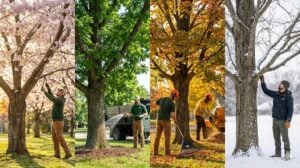
Spring: inspect buds, do light pruning, and scout for pests. Summer: prioritize deep watering, refresh mulch, and prepare for storms or heat. Fall: clean up debris, water roots, and add mulch to prepare for dormancy. Winter: do structural pruning and risk assessments while trees are mostly dormant. Each season’s work prepares trees for the next — for example, fall root watering helps trees handle summer heat. If you find major defects or storm damage, hire a professional crew for safe repairs.
Seasonal checklist to help you plan.
| Season | Tasks | Priority / Tools / When to Call Pros |
|---|---|---|
| Spring | Inspect buds and branches; light pruning; pest scouting | Use hand tools for light pruning; call pros for structural corrections |
| Summer | Deep watering; refresh mulch; storm readiness | High priority for irrigation; call pros for storm-damaged limbs |
| Fall | Clean up debris; root-zone watering; fertilize if needed | Use rakes and mulchers; consult pros for soil work on large trees |
| Winter | Structural pruning; risk assessment; remove hazardous limbs | Best time for major pruning; hire licensed crews for large or tall trees |
Adjusting Care For San Diego’s Climate
For heat and drought, add mulch around transplant root zones, favor deep infrequent watering over surface spraying, and choose drought‑tolerant species when replacing trees. Watch local drought alerts and adjust irrigation accordingly. Micro‑irrigation that targets root zones can save water and help trees. During heat waves, check trees more often for stress and avoid heavy pruning that removes needed leaf area. Local pros can tailor plans to different species and microclimates around El Cajon and San Diego.
For seasonal maintenance, emergency storm response, or full care plans, Pedro’s Tree Service provides licensed, insured crews serving El Cajon and San Diego; call 619-257-2458 or contact us to request a free estimate and seasonal planning visit.
- Inspect regularly: Spotting problems early cuts repair costs and protects safety.
- Prioritize safety: When work is high, heavy, or near power lines, hire licensed professionals.
- Plan seasonally: Time pruning, fertilizing, and watering to match local climate cycles and tree biology.
These final steps help you move from routine care to professional support when needed.
Frequently Asked Questions
What are the benefits of mulching around trees?
Mulch holds moisture, evens soil temperature, and keeps weeds down. A 2–4″ layer of organic mulch (wood chips or bark) cuts evaporation, protects roots from heat, and breaks down over time to feed the soil. Keep mulch a few inches from the trunk to avoid rot. Done right, mulching makes watering more efficient and supports healthier trees.
How can I tell if my tree is stressed?
Stress shows up as wilting, early leaf drop, stunted growth, or discolored foliage (yellowing or browning). Dead branches and slow new growth are also signs. Check soil moisture, look for pests or wounds, and assess overall vigor. Finding stress early lets you adjust watering, mulch, or pest control before problems get worse.
What should I do if I notice a tree leaning?
A lean can mean root or structural trouble. Check for exposed or broken roots and how much the tree has shifted. If the lean is large, the tree is near structures, or it’s newly leaning after a storm, call an arborist for an evaluation. Regular monitoring is important — a dangerously leaning tree is a safety risk in strong winds.
How can I improve soil health for my trees?
Build soil with organic matter like compost and keep a mulch layer to add nutrients over time. Aerate compacted soil around the root zone if needed and consider a soil test to guide targeted amendments. Healthy soil improves root growth, resilience to pests and disease, and overall tree vigor.
What are the signs that a tree needs to be removed?
Signs include extensive decay, large trunk cracks, serious root rot, or a canopy that’s more than half dead. Trees that threaten structures, power lines, or people should be evaluated quickly. When in doubt, have a professional arborist inspect the tree — they’ll help you weigh the risks and options.
How can I attract beneficial insects to my trees?
Plant a mix of flowering plants that bloom at different times to feed beneficials like ladybugs and lacewings. Avoid broad‑spectrum pesticides that kill helpful insects. Provide habitat by leaving some undisturbed areas and a small water source. Encouraging beneficials helps keep pest populations in check naturally.
What is the best time to fertilize trees?
For most trees, early spring just before new growth is a good time to fertilize. Some trees benefit from a follow‑up application in late summer to support roots before dormancy. Always match fertilizer type and timing to the species and consider a soil test to target nutrient needs accurately.
Conclusion
Consistent, sensible tree care keeps trees healthy, safe, and attractive — and it protects your property value. Learn the basics of pruning, watering, and disease prevention, and bring in professionals for risky or complex work. If you’d like a personalized plan or an on‑site evaluation, reach out to Pedro’s Tree Service. We’ll help you keep your trees strong for years to come.